Problems · Homeowner guide
Wooded Lots and Chimneys: Leaves, Branches and Blockages
Trees give a house shade and privacy, and they also feed a steady supply of leaves, twigs and wildlife to the chimney. Here is what gets in, why it matters and how to keep the flue clear.
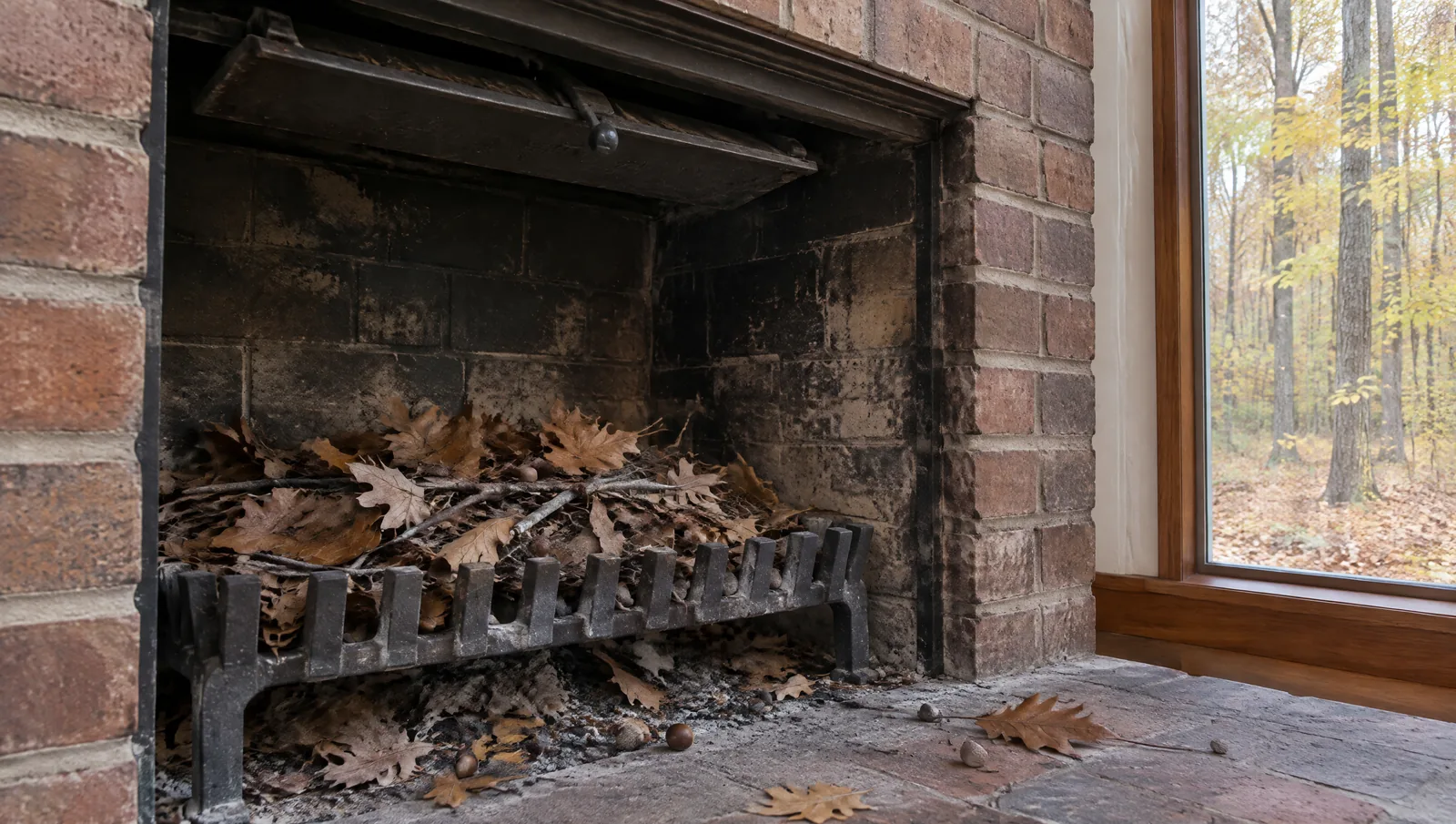
A house tucked into the woods has a chimney that lives in the tree canopy. Every autumn the top of the flue sits under a shower of leaves. Every spring birds look for a sheltered place to nest, and squirrels treat the roof as part of the forest floor. None of this is unusual in the wooded hills of northern New Jersey, but it does mean a chimney on a tree-covered lot needs a slightly different kind of attention than one on an open street.
This guide explains how trees and the animals that live in them end up inside a chimney, which blockages are a real safety problem, and what a homeowner can check without climbing onto the roof.
How leaves and twigs get into a flue
An open flue is a hole in the roof that stays open all year. Leaves drift into it on the wind, twigs drop straight down from limbs overhead, and seeds and acorns roll off the roof slope and catch on the top of the chimney. Most of it falls onto the smoke shelf or settles on top of a closed damper, where nobody sees it until the first fire of the season.
A cap with mesh sides stops most of this. Without one, a single fall can leave enough material in the flue to slow the draft. Wet leaves pack down into a dense mat, and dry ones can ignite from a stray spark when the fireplace is lit.
Nests and animals: the blockage you hear first
Wildlife is the other half of the wooded-lot problem. Squirrels and raccoons climb from overhanging branches onto the roof, and an uncapped flue looks like a hollow tree to them. Birds build nests on the smoke shelf or on top of the damper. Homeowners usually notice scratching, chirping or a musty smell long before they see anything.
One kind of bird calls for patience. Chimney swifts nest inside chimneys during the warm months, and they are protected under the federal Migratory Bird Treaty Act. Wildlife agencies and humane groups advise waiting until the young have left in the fall, then removing the nest material and fitting a cap so the flue is ready for winter. Other animals should be removed by someone equipped to do it humanely, never smoked out with a fire.
Why a blocked flue is more than a nuisance
A fireplace with a partly blocked flue smokes into the room, which is unpleasant but obvious. The more serious risk sits in the chimney that serves the furnace or boiler. Those appliances run every day in cold weather, often in a basement where nobody watches the flue. The Chimney Safety Institute of America lists bird and animal nests among the obstructions that can block a flue and push combustion fumes, including carbon monoxide, back into the house.
That is why CSIA recommends a yearly inspection even for chimneys that vent only gas appliances. In wooded townships where oil still heats most homes, the furnace flue is often the busiest chimney on the property, and a nest or a mat of leaves at the bottom of it is easy to miss. A working carbon monoxide alarm is a sensible backup.
If your home sits on one of the wooded ridges or lake lots of Jefferson, our page on chimney care in Jefferson Township covers how oil furnace flues, caps and liners are handled there.
Branches near the chimney top
Limbs that hang over the roof cause trouble in three ways. They drop leaves and twigs right where the chimney can collect them. They give squirrels and raccoons a bridge onto the roof. And they put fuel close to the chimney outlet, where sparks and embers from a wood fire can land on them.
There is no single New Jersey rule cited here for how far branches must stay from a chimney, but wildfire programs elsewhere use a clear benchmark. Fire Safe Marin in California, for example, tells homeowners to remove limbs with foliage within 10 feet of a chimney opening, because heat, sparks and embers escaping the chimney can ignite nearby trees. That is a useful target for anyone burning wood under a full canopy. Hire an arborist for limbs near the roof or power lines rather than working from a ladder.
- Limbs hanging directly over the chimney or roof
- Branches that touch or rub against the chimney cap
- Dead wood within reach of sparks from the chimney outlet
- Trees that give animals an easy path onto the roof
What a chimney cap can and cannot do
A good cap does most of the work on a wooded lot. Its hood keeps rain and snow off the crown and out of the flue, and its mesh screen keeps out leaves, birds and animals. Stainless steel and copper caps generally outlast painted or galvanized steel, which can rust through after some years of wet winters.
A cap still needs checking. Leaves, seeds and soot can clog the mesh until the screen itself narrows the opening, and CSIA's inspection guidance notes that a rain cap must not restrict the flue. Branches can bend a cap or knock it loose in a storm, and animals sometimes tear the mesh to get in. A look from the ground with binoculars after a big wind tells you a lot.
A simple routine for a house in the trees
Most wooded-lot chimney problems can be caught early with a few habits spread across the year. None of them replaces a professional inspection, but they make it far less likely that a blockage goes unnoticed for a whole season.
- After leaf drop and after major storms, check the cap from the ground for missing mesh, a tilted hood or debris piled on top.
- Clear leaves from roof valleys and gutters near the chimney so they do not hold water against the flashing.
- Listen for scratching or chirping in spring and early summer, and keep the damper shut if you hear it.
- Stack firewood off the ground and cover only the top, as the EPA recommends, so it dries properly and burns cleaner.
- Store fireplace ashes in a metal can kept outside and away from the house, never on a deck or in leaf litter.
- Have the chimney inspected once a year, with sweeping when the inspection shows buildup or debris.