Chimney Liner Repair & Replacement in Hardyston, NJ
Chimney liner repair and replacement in Hardyston, NJ deals with the part of a chimney nobody sees. The liner is the inner wall of the flue. It keeps heat, smoke, creosote and moisture inside the flue and away from the brick and the wood framing around it. When it cracks, flakes or stops suiting the appliance it serves, the chimney is no longer doing its job safely, however good the outside looks.
Chimney Sweep Hardyston repairs and replaces liners for fireplaces, wood stoves, inserts, and oil and gas heating appliances in Hardyston Township and nearby Sussex County communities. Call (862) 362-1333 or use Request Service, and tell us what the chimney serves now and anything you plan to connect next.
Fix one tile, or reline the whole flue?
Damage only at the top tile
A cracked or loose top tile, often broken by a failing crown, can sometimes be replaced during the crown work. The camera has to show the tiles below are sound.
Cracks or gaps further down
Tiles buried inside the masonry cannot be swapped one at a time without taking the chimney apart. Relining the flue is the usual answer.
A new stove, insert or furnace
The flue has to match the new appliance's outlet and fuel. An open fireplace flue is often far too large for a stove.
Oil heat switching to gas
Gas exhaust is wetter and more corrosive. A clay flue that served an oil burner often needs a new liner sized for the gas appliance.
Signs a chimney liner needs attention
Liner trouble rarely shows itself in the flue. The clues tend to turn up at the bottom of the chimney, on the outside brick or in rooms near the chimney, so it pays to know what they look like.
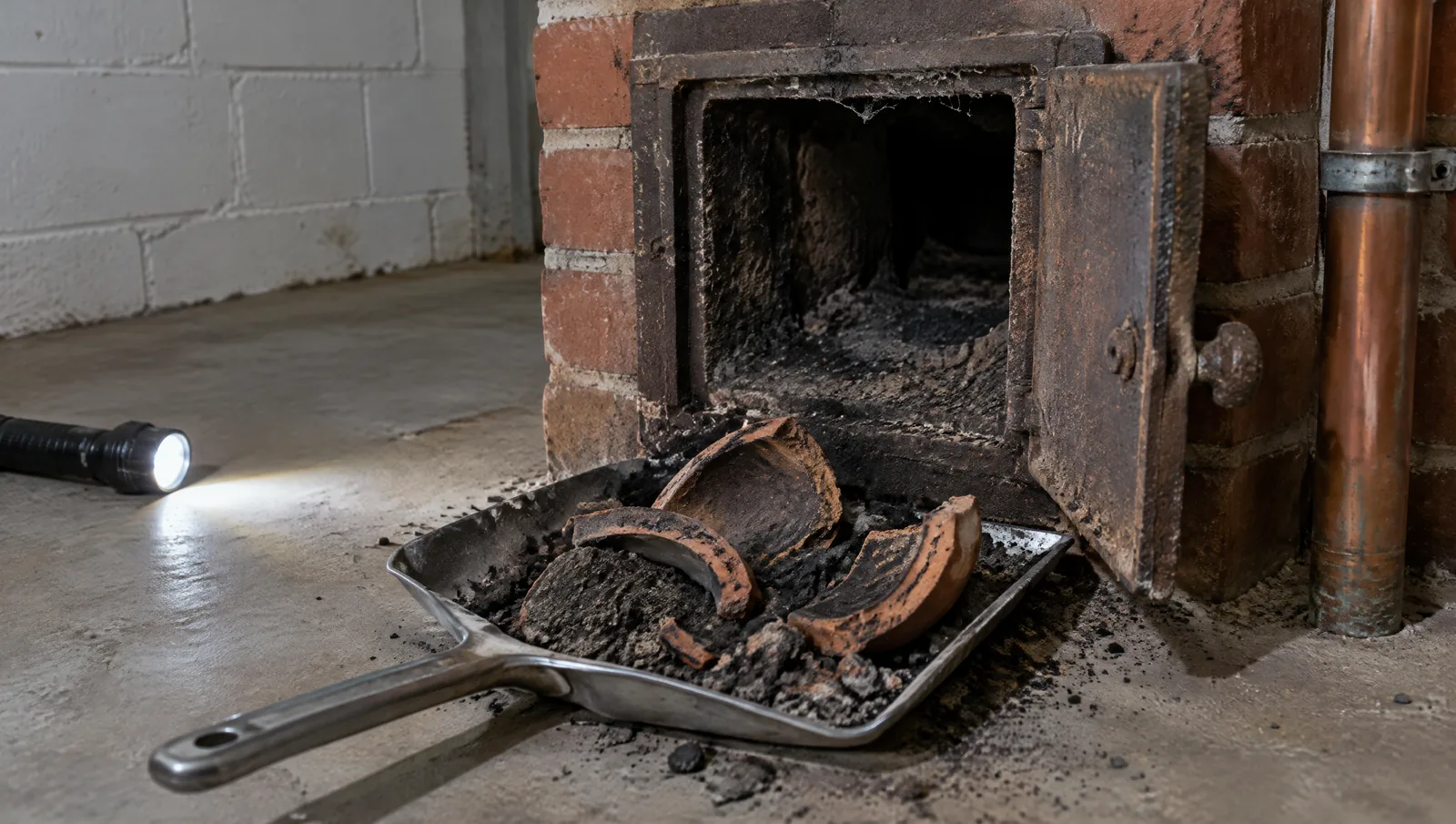
- Curved, terracotta-colored shards in the firebox, on the smoke shelf or behind the cleanout door
- Smoke, or a smoky smell, coming through the brick or showing up in a room upstairs
- Dark staining on the outside of the chimney or on a wall near the stovepipe
- Flaky, scaly debris collecting at the base of a furnace or boiler flue
- A fire that is harder to start, spills smoke into the room, or leaves more creosote than it used to
- A cracked, shifted or missing tile visible at the top of the chimney
Why symptoms alone are not enough
Several of these can also come from a damper, a cap or a draft problem in the house. And a tile can crack halfway up a flue with nothing showing outside at all. A camera scan of the full height of the flue is what turns a hunch into a diagnosis.
Why chimney liners crack, flake and wear out
Liners fail for a handful of reasons, and the reason shapes the fix. A liner broken by a chimney fire, one eaten by corrosive exhaust and one that was simply the wrong size each lead to a different conversation.
Heat and chimney fires
CSIA explains that a chimney fire can reach about 2000°F, hot enough to crack tiles, melt mortar and cause a liner to collapse. Even short of that, thermal shock cracks tiles and displaces mortar, leaving a path for flames toward the wood frame of the house.
Corrosive exhaust from oil and gas
CSIA notes that today's high-efficiency gas furnaces produce exhaust with a lot of water vapor, which makes a flue more corrosive. Clay liners can flake under those conditions, and the debris can block the chimney. Oil flues have their own issue, as soot builds up on the liner and needs regular attention.
Water at the top
The top tile is the most exposed piece of the liner. A cracked crown or a missing cap lets rain soak it, and every freeze works on it. NFPA 211 calls for a bond break where that tile passes through the crown. When the crown is cast tight against the tile, the tile cannot expand freely, and it cracks.
A flue that was never the right size
University of Idaho Extension explains that an oversized chimney cools the flue gases because of its large surface area. The exhaust slows, condenses and leaves creosote, and draft suffers. A liner that is too large for the appliance wears faster and works worse.
How liner damage is diagnosed
CSIA recommends a Level 2 inspection before any chimney is lined or relined. It includes a required video scan, so the decision rests on the whole height of the flue rather than the first few feet you can see with a flashlight.
During the scan, the inspector looks for cracked tiles, open mortar joints, missing pieces and offsets where the flue bends or narrows. They also measure the inside of the flue and its height from the top of the chimney to the bottom of the liner. CSIA's procedure then asks a plain question: is this flue sized for continued use? If changes are planned, the inspector should give the flue size the new setup needs.
- Is the damage limited to the top tile, or spread through the flue?
- Are the mortar joints between tiles intact?
- Is the flue clear, or partly blocked by fallen pieces?
- Does the flue size suit the appliance, today and after any planned change?
- Are there unused openings into the flue that need sealing?
When a chimney liner can be repaired
Repair works when the damage is small and can be reached. The clearest case is the top tile, which sits exposed in the crown and is the easiest piece of the liner to get at.
Replacing the top flue tile
A top tile cracked by weather or a tight crown can often be cut out and replaced while the crown is repaired. The new crown should leave the bond break NFPA 211 calls for, so the tile can move with heat and cold. Skipping it invites the same crack again.
Small gaps lower in the flue
Some gaps in the mortar joints deeper in the flue can be sealed with a flue resurfacing system made for that purpose. That only makes sense when the camera shows the tiles themselves are sound and the flue is already the right size for the appliance.
When repair stops making sense
Several cracked tiles, sections that have shifted, a collapsed area or an appliance change all point toward relining. Patching one defect in a flue that has several leaves the real problem in place.
Relining a chimney: clay, stainless steel and cast-in-place liners
The International Residential Code states plainly that masonry chimneys shall be lined, and that the lining must suit the type of appliance connected, following the appliance listing and the manufacturer's instructions. It recognizes clay flue lining, listed chimney lining systems that comply with UL 1777, factory-built chimney units listed for use inside masonry chimneys, and other approved materials that resist corrosion and cracking from flue gases and condensate at temperatures up to 1,800°F.
Clay tile
Clay is what most older masonry chimneys were built with, and it handles heat and corrosion well while it is intact. The catch is that the tiles go in as the chimney is built. The code has them starting at least 8 inches below the lowest inlet and sloping no more than 30 degrees from vertical. Replacing them inside a finished chimney generally means taking it apart, which is why clay is rarely the choice for relining.
Stainless steel
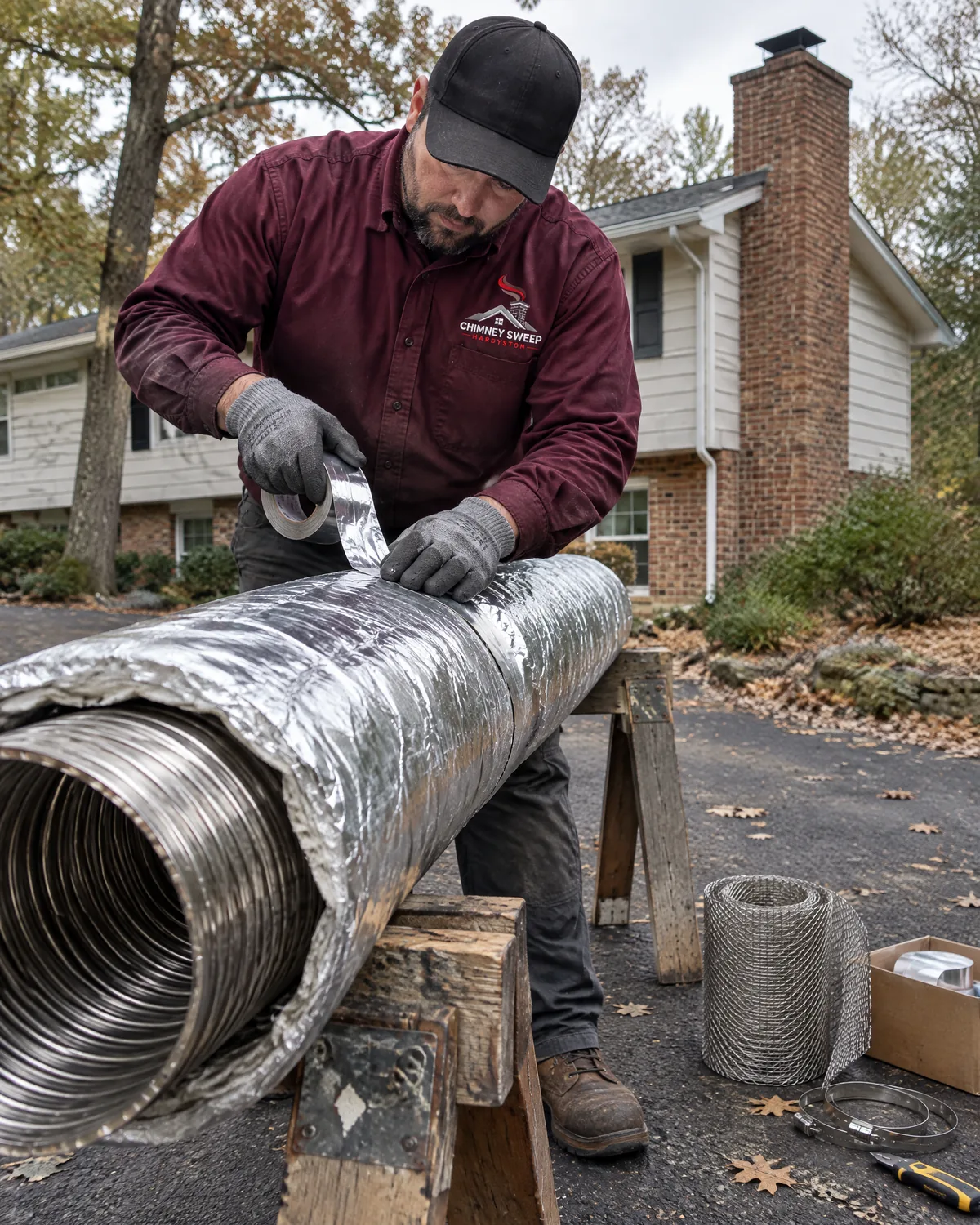
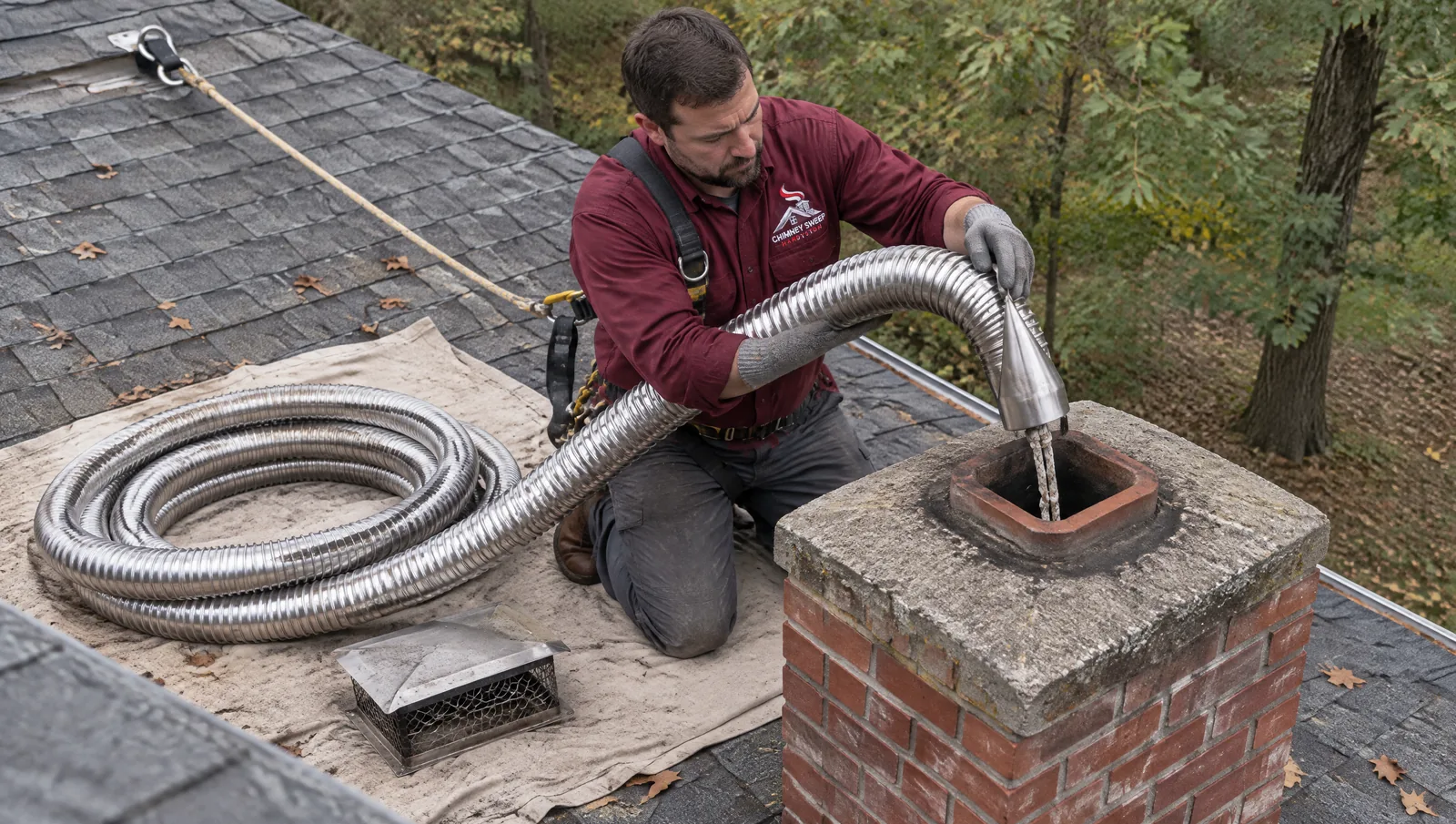
A stainless steel liner is a round or oval pipe, flexible or rigid, lowered down the existing flue. It connects to the appliance at the bottom and finishes with a top plate and cap. Because it comes in set diameters, it can be matched to the outlet of a stove, insert, boiler or furnace, and flexible liner can follow a moderate bend. Stainless liners are listed for particular fuels and uses, so the listing has to match what will be connected.
Cast-in-place
A cast-in-place liner forms a new masonry flue inside the old one. As described in U.S. patent filings on chimney lining, an inflatable form is set in the chimney, a masonry mix is poured around it, and the form is removed once the mix cures. The result is a continuous flue with no tile joints. The poured layer does take up room, so the finished flue is smaller than the original and still has to suit the appliance.
Sizing the liner to the appliance
The code sets a floor: a chimney flue may not be smaller in area than the connector from the appliance. For an open masonry fireplace, one sizing option requires a round flue of at least one-twelfth the area of the fireplace opening.
Bigger is not safer. University of Idaho Extension points out that stove exhaust runs cooler than fireplace exhaust, so a stove venting into a large fireplace flue tends to build creosote. Matching the liner to the appliance is what keeps the exhaust warm and moving.
Insulating a liner for wood
CSIA notes that liners for gas and oil appliances do not require insulation, but liners serving solid-fuel appliances do. The insulation can be a blanket wrap, expanded mica or a masonry insulation, and CSIA's advice is to insulate every liner that serves a wood-burning appliance. A warmer flue drafts better and condenses less, which is the same reason an oversized flue causes trouble.
Adding a wood stove or fireplace insert
A stove or insert usually goes into a fireplace whose flue was sized for an open fire. Because a new appliance changes how the chimney is used, a Level 2 inspection comes first. The common result is a stainless liner matched to the appliance outlet, run up the chimney and insulated for wood. The appliance manual sets the liner size and the clearances, and the installation follows it.
Switching from oil to gas
Census estimates show about 28% of occupied homes in Hardyston heating with fuel oil and about 45% with utility gas, so the switch is a common question here. CSIA points out that many gas appliances now vent through chimneys built for oil furnaces, and that modern furnaces can run into trouble in flues sized for older equipment. A conversion is the right time to scan the flue, sweep it and fit a liner sized for the gas appliance.
Should you use a chimney with a damaged liner?
Usually not until it has been checked. CSIA explains that cracked tiles and displaced mortar give a chimney fire a path to the house framing. On the heating side, a flue partly blocked by flaking tile can push exhaust back indoors instead of up and out.
Stop using the fireplace, stove or furnace if a scan has shown cracked or collapsed tiles, if pieces keep falling into the firebox or cleanout, or if smoke appears where it should not. For a heating appliance that can mean arranging other heat until the flue is fixed.
Keep carbon monoxide alarms working on every level of the home and outside each sleeping area, as the U.S. Fire Administration recommends. Headache, dizziness and upset stomach are among the common symptoms of carbon monoxide poisoning the CDC lists. If they appear while the heat is running, get everyone outside and call for emergency help.
What affects the cost of a chimney liner job
Liner work is priced on the specific flue, which is why the scan comes before the estimate. These are the details that move it.
- The approach: top tile repair, stainless relining or cast-in-place
- Flue height and diameter, which set how much liner is needed
- Insulation for a liner serving a wood-burning appliance
- Offsets, and whether old tile has to be broken out to fit the liner and its insulation
- Roof pitch, chimney height and access to the top
- Crown or cap work done at the same time
- The connection at the bottom, such as an insert adapter or a tee for a stove or furnace
- How many flues in the chimney are being lined
What the estimate should name
A clear estimate states the liner type, its diameter and length, the fuel it is listed for, and whether insulation is included. It should also say what was seen on the scan. An estimate written before anyone has looked inside the flue is a guess.
What a relining job looks like
It starts with the Level 2 inspection and camera scan, followed by a written recommendation that names the liner, its size and the reason for it. If the flue is heavily coated or partly blocked, it is swept before any work begins.
On the installation day, the room is protected and most of the work happens from the roof. A stainless liner is fed down the flue, wrapped in insulation if it serves a wood appliance, connected at the bottom and finished with a top plate and cap. A cast-in-place job involves setting the form, the pour and a curing period before the appliance can be used.
Afterward you should have photos or video of the finished liner, its size and type, and clear guidance on when the appliance can go back into use. To start with an inspection, call (862) 362-1333 or use Request Service.
Homeowner guide: Signs Your Chimney Liner Is Failing
Chimney Liner Repair & Replacement questions
Can a new liner go down a chimney that has a bend in it?
Often it can, because a flexible stainless steel liner will follow a moderate offset where rigid pipe or new clay tile cannot. The camera scan comes first, since CSIA's Level 2 procedure has the inspector note each offset's angle and whether the flue narrows there. A sharp or tight offset can limit the liner size, which matters when the appliance needs a larger flue.
Will relining change how my open fireplace draws?
It can, so the liner has to be sized for the fireplace opening and not only for the space inside the chimney. One sizing option in the International Residential Code calls for a round flue of at least one-twelfth the area of the fireplace opening. A liner too small for a wide opening can let smoke roll into the room, while a well-matched one drafts steadily.
Do furnace and boiler liners need insulation too?
Insulation is not required on liners for gas and oil appliances, according to CSIA, but it can still help. CSIA notes that gas and oil appliances venting into an exterior chimney benefit from it, because a cold outside wall cools the exhaust and encourages condensation inside the flue. Liners that serve wood-burning appliances are a different case and need insulation.
Book chimney liner repair & replacement in Hardyston
Tell us what you are seeing and the town you are in.