Chimney Sweep in Lafayette, NJ

Hiring a chimney sweep in Lafayette, NJ often means having a wood stove flue cleaned, not just a fireplace. Firewood is still a real heating fuel in this small, rural township, and a stove that runs from November into April lays down creosote far faster than a few holiday fires ever could.

Chimney Sweep Hardyston drives out to Lafayette Township for sweeping, inspections, liner work, caps, masonry repair and fireplace cleaning. Pre-war houses, oil-heated homes from the 1980s and 1990s and newer places on larger lots each come with a different kind of chimney, so every visit begins by working out what yours actually serves.

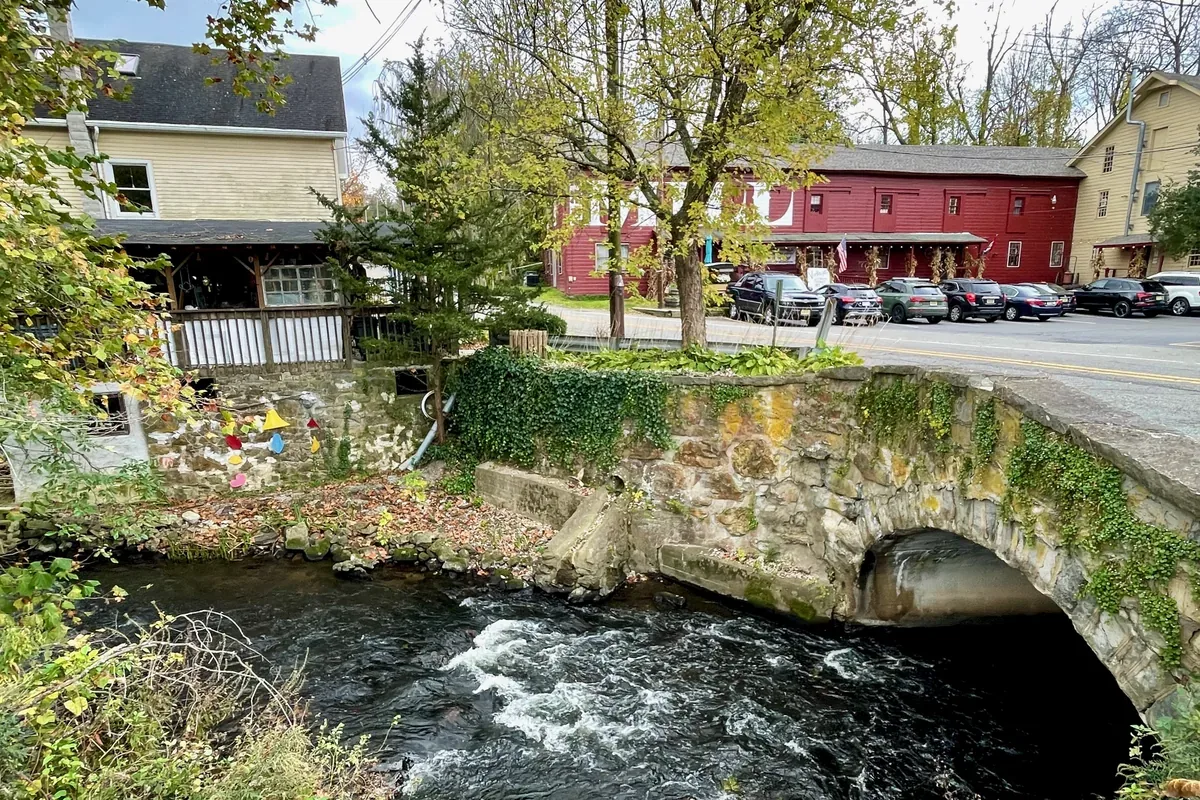
Stone arch bridge over the Paulins Kill in Lafayette Village, Lafayette Township, New JerseyPhoto: Zeete, CC BY-SA 4.0, via Wikimedia Commons

Which Lafayette chimney problem sounds familiar?

Tap the problem that best matches your home. You will see what usually causes it in a wood, oil or propane chimney and which service to ask for.

In a house that burns plenty of wood, the usual culprit is a flue narrowed by creosote, often near the top where the chimney runs coldest. Damp logs, a stove air control turned right down or a cold flue at start-up can push smoke back too. Let the fire burn out and get the flue swept before lighting another.

See what a sweeping visit covers

Get Estimate

Chimney services for Lafayette homes

Sweeping wood stove and fireplace flues in Lafayette

Wood is the main heating fuel in about 6.9% of Lafayette homes, one of the highest shares among the towns around Hardyston, and a stove fed every day builds creosote quickly. CSIA's guidance is to sweep once sooty buildup reaches 1/8 of an inch, or sooner if shiny, glazed creosote appears. A busy stove or insert can hit that mark well before spring, so heavy users benefit from a midwinter check. Oil flues, which serve most homes in the township, are swept for soot and scale on the same visit.

Chimney sweeping in Hardyston and nearby towns

Masonry repair on exposed Lafayette chimneys

Repair work covers the crown, the mortar joints, the brick and the flashing where the chimney meets the roof. A chimney on an open, rural lot takes wind-driven rain and snow from every side, and Lafayette's long, cold winters give that water plenty of chances to freeze inside the masonry. Look for hairline cracks across the crown, mortar you can scrape out with a key, rust streaks below the cap or a damp patch on the ceiling near the chimney. Brick on a pre-war house usually calls for a softer mortar than a modern bagged mix, so the repair should suit the chimney's age.

Chimney Repair

Inspections when a Lafayette stove or insert changes

An inspection comes before any change to what the chimney serves. CSIA recommends a Level 2 inspection, which includes a video scan of the flue, when an appliance is added or replaced with one of a different fuel, efficiency or type. In Lafayette that often means fitting a wood stove or insert into an old fireplace, or swapping an oil boiler for propane. The same inspection makes sense after a chimney fire, before a sale, or when a house has sat empty and nobody knows its history.

Chimney Inspection

Liners for wood stoves, inserts and oil boilers

In a Lafayette farmhouse, a wood stove vented into a large clay flue often drafts poorly, because the smoke cools as it spreads out and drops more creosote on the way up. A stainless-steel liner matched to the stove's outlet solves that, and CSIA notes that liners serving wood-burning appliances should be insulated. Oil boilers bring a different problem, since their soot and acidic deposits can flake clay tile over time. Signs of liner trouble include tile bits at the cleanout, a stove that smokes when the door opens and heavy creosote that comes back soon after a sweep.

Chimney Liner Repair & Replacement

Caps for Lafayette's open-country chimneys

A cap's hood and mesh screen keep rain, snow, leaves and wildlife out of the flue. Homes ringed by fields and woodland see plenty of all four, and an open chimney on a quiet property makes an inviting den. On a wood-burning chimney the mesh also helps stop embers from leaving the flue, which matters near dry grass or a woodpile. Check for mesh clogged with creosote, which can choke the draft, along with rust, a loose hood or a cap knocked crooked by a storm.

Chimney Cap Installation & Repair

Fireplace and insert care in Lafayette

Some Lafayette homes still burn wood in an open fireplace, and others have closed theirs up with a stove insert. Either way, the firebox and its mortar take the heat first. Watch for firebrick with open joints or deep cracks, a damper that no longer seals, a warped insert surround, or creosote dripping from the smoke chamber. Cleaning removes the ash and deposits, while repairs to the firebox or damper keep heat and sparks where they belong. CSIA also points out that glass doors and a partly closed damper starve a fire of air and increase creosote.

Fireplace Repair & Cleaning
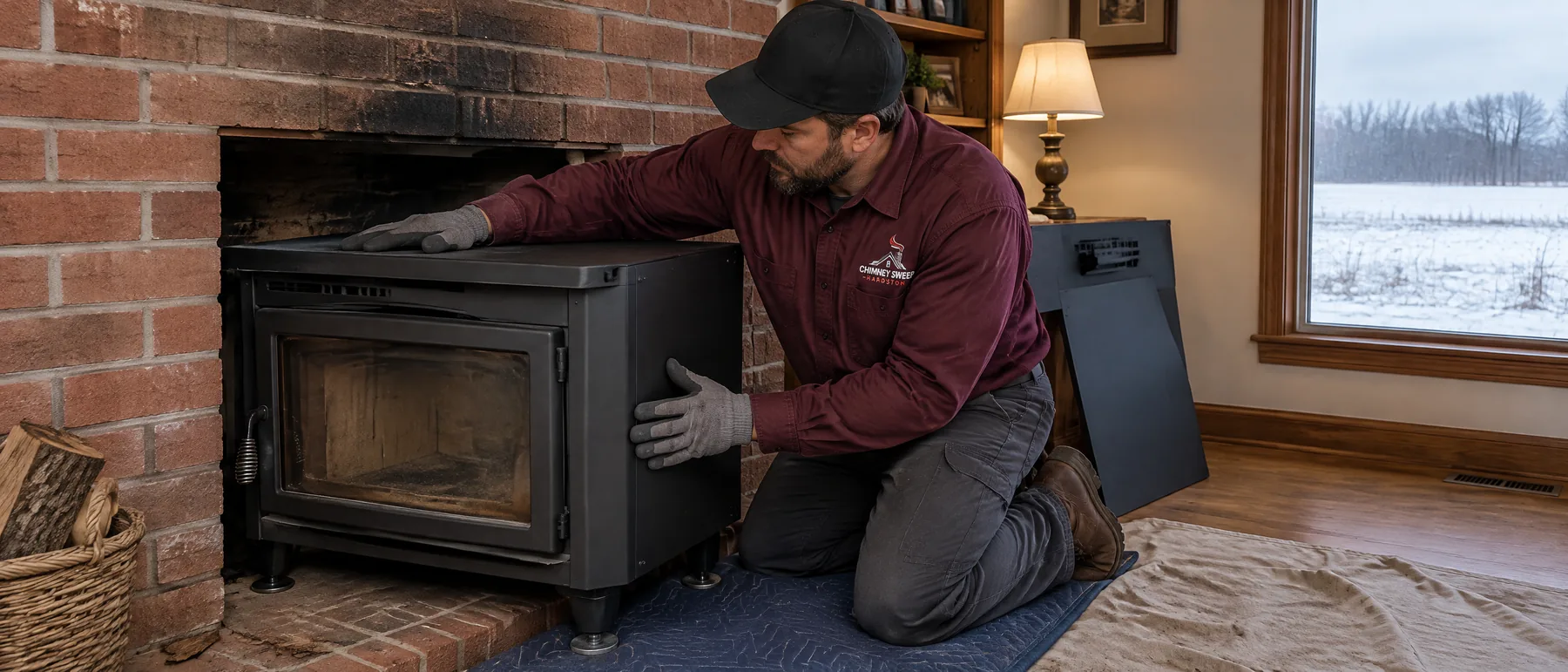
Technician easing a black wood stove insert into a brick fireplace in a family room

Need one of these in Lafayette? Call (862) 362-1333 or send a request.

Get Estimate

What Lafayette's long heating season does to a chimney

Lafayette sits in rural northwestern Sussex County, and the NOAA weather station in nearby Newton shows how much heat a winter here demands. Its 1991 to 2020 normals list close to 6,000 heating degree days a year, an average winter low near 20°F and about 19 nights each year at 10°F or colder.

Bitter nights are when a wood stove gets turned down to smolder until morning. A slow, starved fire sends cooler smoke up the flue, and that smoke leaves creosote behind faster than a hot, bright fire does, which is why the EPA's Burn Wise program tells wood burners to build hot fires. Freezing is the other half of the story. Newton averages about 142 nights a year at or below 32°F, so water that soaks into a crown or mortar joint during a thaw is frozen again within hours.

Lafayette homes, old and new, and how they heat

Lafayette's housing splits into two eras. About 21% of homes were built in 1939 or earlier, and some of the oldest stand in the village itself, where the Lafayette Village Historic District was added to the National Register of Historic Places in 2013. Much of the rest came later, and the median home dates to 1983. Chimneys on pre-war houses may be unlined or carry clay tile that has never been seen on camera, while the newer ones often serve a stove or an efficient boiler.

Fuel decides most of the chimney work. Fuel oil heats about 54% of occupied homes, propane 18% and wood 6.9%. With 88% of homes owner-occupied, the person loading the stove is usually the one responsible for the flue, so knowing when to sweep and when to inspect pays off directly in safer winters.

Before a stove, insert or liner goes in, it is worth checking local requirements. Lafayette Township describes itself on its official website as a small community in rural Sussex County, and its municipal directory lists the Construction Office and Fire Prevention contacts.

Booking a chimney visit in Lafayette Township

Chimney Sweep Hardyston covers all 18.7 square miles of Lafayette Township, from the village center to homes far out along its rural roads. We sweep wood, oil and propane flues, inspect chimneys, repair masonry, reline flues, fit and fix caps, and clean or repair fireplaces. Call (862) 362-1333 or use the contact page to ask for a visit. It helps to mention what you burn, roughly how much wood goes through the stove in a winter, and anything odd you have noticed.

(862) 362-1333

Request service online →

Homeowner guide: How Often to Sweep When You Heat With Wood

Lafayette ZIP code

All of Lafayette Township falls within a single ZIP code, 07848.

  • 07848

Serving Lafayette from outside the township

Lafayette homeowners get a visit at the house itself. Chimney Sweep Hardyston operates across the region as a service-area business and has no shop or staffed site anywhere in the township, so the map here outlines Lafayette Township's boundaries rather than marking a business.

Lafayette chimney questions

We burn wood all winter in Lafayette. Should the chimney be swept more than once a year?

It may need a second sweep, depending on how fast creosote builds in your flue. CSIA advises sweeping once deposits reach 1/8 of an inch, and a stove burning daily can get there by midwinter. A quick check partway through the season tells you whether that second sweep is due.

Can a wood stove be put into the old fireplace in my Lafayette house?

Often it can, but the chimney has to be inspected and usually relined first. CSIA recommends a Level 2 inspection when an appliance is added, and an insert normally needs a stainless liner sized to its outlet so it drafts well and does not coat the flue in creosote.

Our Lafayette home was built before 1940. Is the chimney safe to use?

It may be, but a chimney that old should be inspected with a camera before you rely on it. Some were built without a liner, and others have clay tile and mortar worn by decades of fires. The inspection shows what is there and what needs fixing.

Can the oil flue and the wood flue be swept on the same visit?

Yes, a chimney with two flues can be swept in one visit, and both should be. The oil flue gathers soot and scale while the wood flue gathers creosote, so each gets cleaned and checked on its own terms.

The glass on my stove turns black fast. Does the chimney need cleaning?

Not always, because black glass usually points to a smoldering fire or damp wood first. Burning hotter with drier wood often clears it. If the glass still blackens quickly and the stove draws poorly, the flue may be partly blocked and should be checked.

Will a chimney sweep come out to the rural parts of Lafayette?

Yes, Chimney Sweep Hardyston serves all of Lafayette Township, including homes well outside the village. Call (862) 362-1333 or request service online, and mention a long driveway or any access detail that helps the visit go smoothly.

Get your Lafayette chimney ready for burning season

Let us know what you burn and how often, and we will set up a sweep or an inspection. Phone (862) 362-1333 or send a service request.