Fireplace Repair & Cleaning in Hardyston, NJ
Fireplace repair and cleaning in Hardyston, NJ deals with the part of the system you can see and touch: the firebox, the damper, the smoke chamber just above it, the doors, the hearth and, in many homes, a gas burner and log set. These parts take direct flame every time the fireplace runs. When one cracks, warps or clogs, the fire draws poorly, smoke drifts into the room, or heat reaches places it should not.
This page works through the fireplace one component at a time. It explains what fails, what each repair involves, and what a fireplace cleaning covers. Brushing out the flue itself is a full chimney sweeping, which has its own page.
Chimney Sweep Hardyston repairs and cleans wood-burning and gas fireplaces in Hardyston Township. Call (862) 362-1333 or use Request Service and describe what the fireplace is doing. A photo of the firebox or the damper helps.
What is your fireplace doing?
Smoke rolls out of the opening
Make sure the damper is fully open. If it is, suspect a cold or blocked flue, a rough smoke chamber, or a house that draws air in through the chimney.
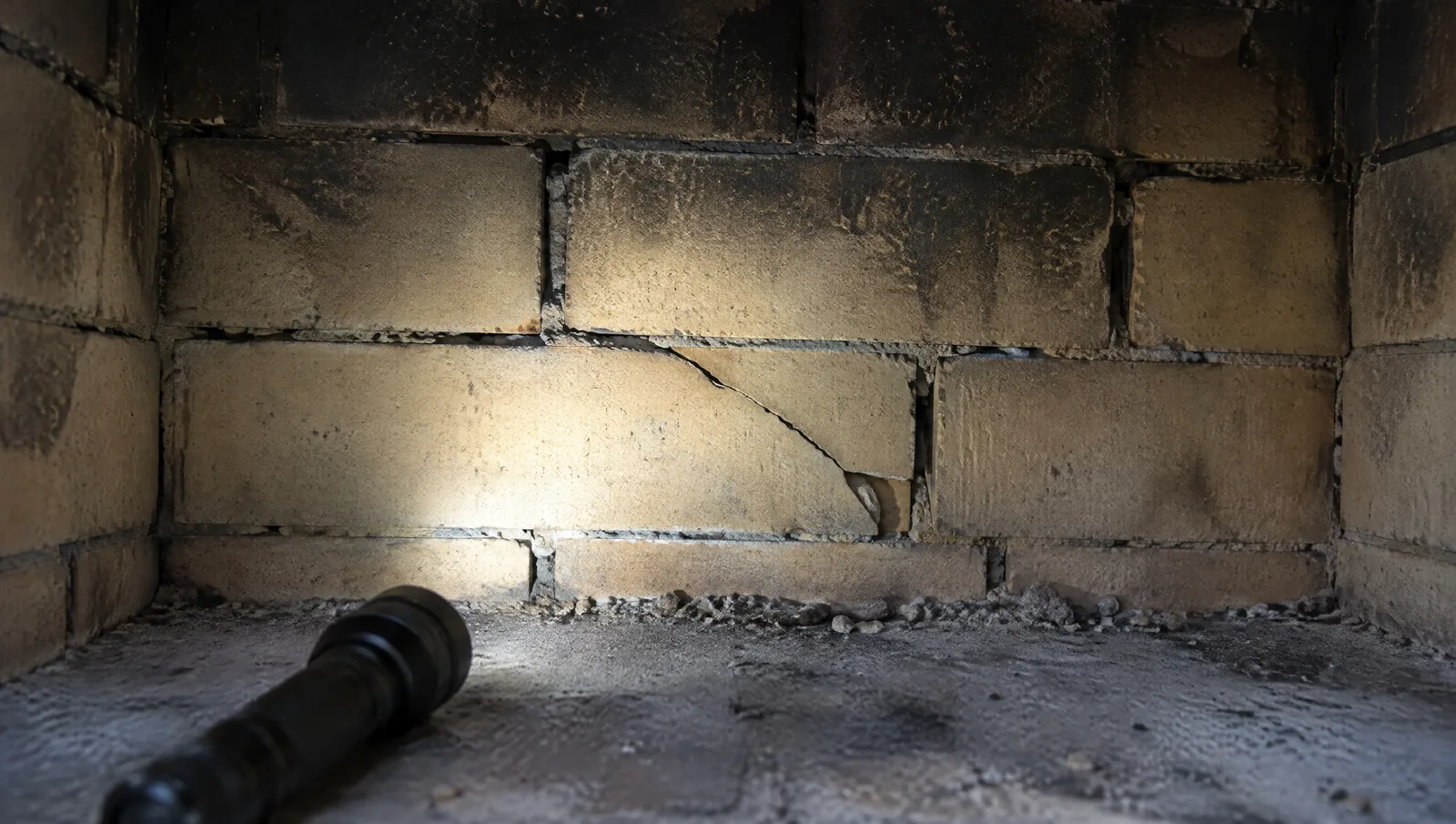
Cracks or gaps in the firebox
Fine surface cracks in firebrick are normal wear. Open joints, missing mortar or broken refractory panels need repair before the next fire.
Damper sticks, rattles or lets in cold air
Cleaning sometimes frees it. A warped or rusted plate is replaced, or a top-sealing damper is fitted at the top of the chimney.
Gas fireplace won't light or stay lit
Turn it off and have the pilot, burner, log placement, glass seal and vent checked before using it again.
Signs the fireplace itself needs attention
The firebox and its parts wear differently from the chimney above them. They take flame and heat head-on, so damage tends to show as cracks, warping, loose joints and smoke stains you can spot with a flashlight and a few minutes on your knees.
- Firebrick with open joints, chipped faces or mortar crumbling out onto the hearth
- A cracked or crumbling back or side panel in a factory-built fireplace
- Black smoke stains on the fireplace face above the opening
- A damper handle that is stiff, slips, or will not hold the plate open
- A cold draft from a damper that is supposed to be shut
- Glass doors with cracked panes, a loose frame, or doors that no longer close square
- Cracks in the hearth or in the floor area in front of the opening
- Sooty, crumbling or shifted gas logs, or a pilot light that keeps going out
- Rough, stepped brick or loose material visible above the damper
What wears out fireboxes, dampers and doors
Most fireplace damage comes from a few repeating stresses. Knowing which one is at work points to the right repair and keeps it from coming back.
Heat, then cold, over and over
A firebox heats quickly and cools slowly after every fire. Firebrick and refractory panels expand and contract each time, and fine cracks are the result. Fires built too large for the opening, or fuel that flares very hot such as scrap lumber or packaging, speed the process up.
Water from above
Rain falling down an uncapped flue lands on the damper and the smoke shelf. Damper plates rust, hinges seize, and the mortar at the back of the firebox softens.
Creosote and soot
CSIA lists restricted air supply, unseasoned wood and cooler-than-normal chimney temperatures as factors that speed creosote buildup. Closing the glass doors on a burning fire and opening the damper only part way both starve the fire of air. The residue coats the damper and smoke chamber as well as the flue.
The wrong fuel or the wrong parts
A factory-built fireplace is tested and listed as a complete unit. Burning wood in one made only for gas, or fitting panels, grates or doors not made for that model, takes it outside the conditions it was listed for and can crack the firebox.
Why a fireplace smokes into the room, and how to narrow it down
Smoke spilling out of the opening is the most common fireplace complaint. The causes form a short list, and they are worth checking in roughly this order, starting with the easiest.
The damper
A damper that is only partly open chokes the fire. CSIA advises having the damper fully open before you light a fire. If the handle moves but the plate stays put, the linkage or the plate itself is stuck.
A cold flue
A chimney on an outside wall fills with heavy, cold air between fires, and smoke spills until the flue warms up and starts to draw. Starting with a small, hot kindling fire usually gets the draft moving faster than a big log load.
The throat and smoke chamber
The smoke chamber funnels smoke from the firebox into the flue. New Jersey's edition of the International Residential Code requires the passage above the firebox, including the throat, damper and smoke chamber, to be at least as large in cross-section as the flue. It also requires corbeled masonry inside the chamber to be parged smooth. A rough, stepped chamber catches creosote and disturbs the draft.
The house
Range hoods, bath fans, a clothes dryer or a forced-air system can lower the air pressure indoors, and the easiest way for air to get back in is down the chimney. CSIA describes air being drawn down a chimney as a symptom of overall pressure problems in the house. If cracking a nearby window stops the smoke, the house is the cause, not the fireplace.
The opening versus the flue
A fireplace opening that is too large for its flue never drafts well. The same code sizes a masonry fireplace flue as a share of the opening, for example at least one-tenth of the opening area for a square flue. A metal smoke guard across the top of the opening, or well-fitted glass doors, can bring the two closer into balance.
Fireplace repairs, part by part
Fireplace repairs fall into a handful of groups. Each one uses materials rated for the heat that part actually sees, which is why ordinary masonry products are the wrong choice inside a firebox.
Firebrick and refractory mortar
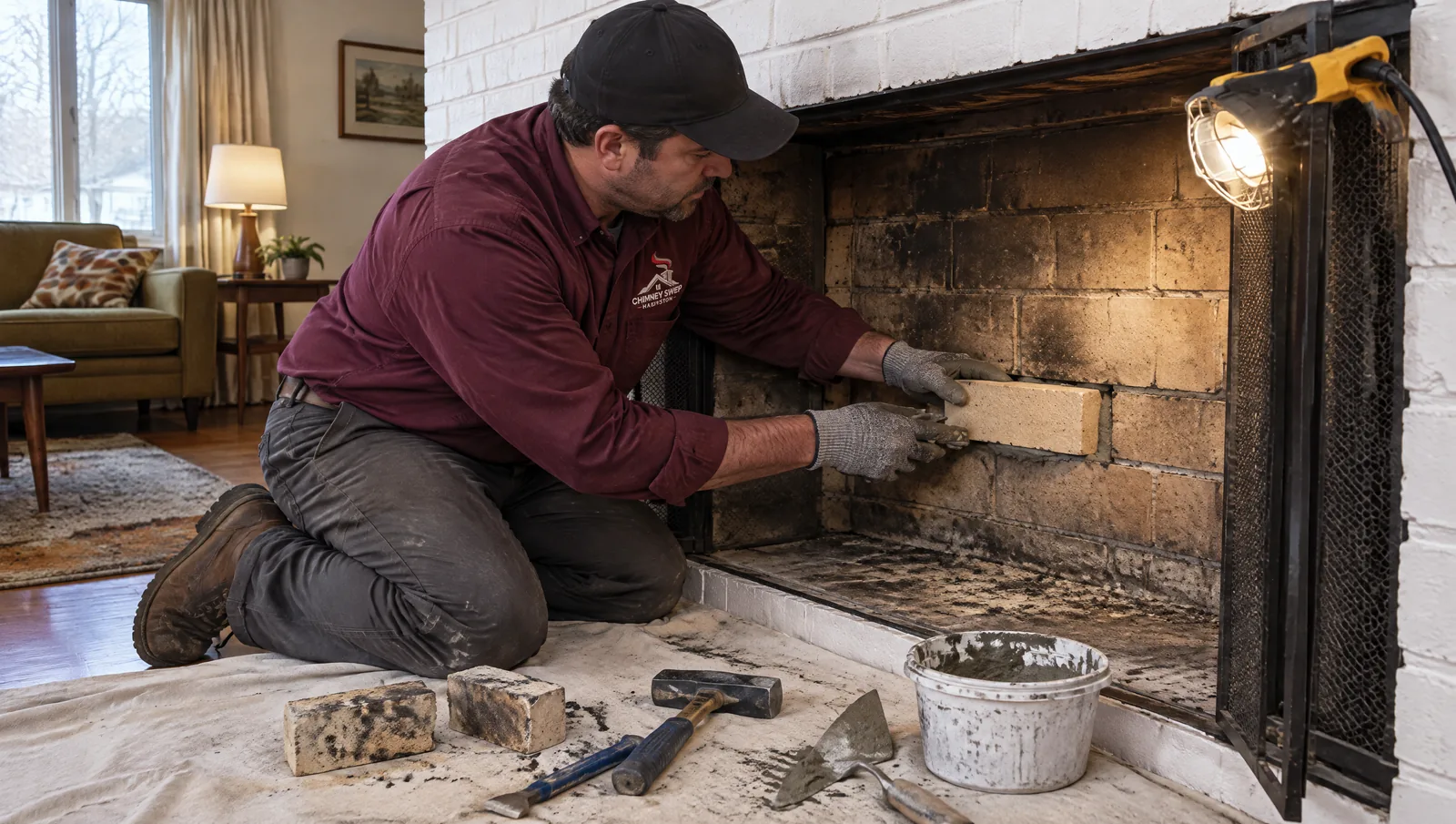
Firebrick in a masonry firebox is laid in refractory mortar, not standard mortar. The New Jersey edition of the International Residential Code calls for medium-duty refractory mortar meeting ASTM C199 and joints between firebricks no wider than a quarter inch. Repair means cutting out failed joints and repointing them, or replacing cracked and spalled bricks.
Refractory panels
Factory-built fireplaces use molded refractory panels in place of brick. Cracked or crumbling panels are replaced with panels made for that exact model, identified from the rating label inside the unit or from its manual.
Dampers
The same code requires a masonry fireplace to have a ferrous metal damper at least 8 inches above the top of the opening, operable from the room. A stuck throat damper may only need cleaning and new hardware. A warped or rusted-through plate is replaced, or a top-sealing damper is installed at the chimney top, which also closes off drafts and animals when shut.
Smoke chamber parging
Parging is a coat of heat-resistant material troweled over the inside of the smoke chamber. It closes gaps between bricks, smooths the path for smoke and makes the chamber easier to clean. It is common work on older fireplaces whose chambers were left as rough, stepped brick.
Glass doors and screens
Doors with cracked glass, a loose frame or broken hinges are repaired with parts made for that door, or replaced. On a factory-built fireplace, only doors approved for that model belong on it.
Hearth and hearth extension
The hearth extension is the noncombustible floor in front of the opening. For a masonry fireplace with an opening under 6 square feet, the code calls for it to reach at least 16 inches in front and 8 inches past each side. Cracked tile or a loose stone hearth is reset, and a hearth extension that falls short is worth correcting before a log rolls out.
Gas logs and gas fireplaces
Gas service covers the burner, pilot assembly, igniter, log set, glass gasket and vent. Logs have to sit exactly where the manufacturer's diagram shows, because a misplaced log puts flame on the ceramic and makes soot. Vent-free logs are a separate matter. The code does not allow an unvented gas log heater in a factory-built fireplace unless that fireplace has been tested, listed and labeled for it.
When to replace a part instead of repairing it
Repair comes first whenever the surrounding structure is sound. Replacement is the better choice in a few situations.
- Refractory panels in a factory-built unit that are crumbling, not just showing hairline cracks
- A throat damper that is warped or rusted through, since CSIA lists warped damper metal among the signs of a past chimney fire
- Firebrick that has lost its face across a large part of the back wall
- Glass doors no longer made, with no replacement parts available
- A factory-built fireplace damaged beyond the parts its manufacturer still offers
Replacing a worn-out fireplace
When an old factory-built unit fails, the usual options are a new listed fireplace or an insert with its own properly sized liner. Either way, the chimney or vent has to suit the new appliance. CSIA's Level 2 procedure recommends that level of inspection whenever the new appliance burns another fuel or differs in efficiency or design from the old one.
Is it safe to use the fireplace in the meantime?
Hold off on fires if you can see into gaps in the firebrick or panels, if the damper will not open all the way, or if the hearth extension is cracked through. Those are the routes heat and embers take toward wood framing.
With a gas fireplace, a smell of gas means stop. Get everyone out, then phone the gas company or 911 once you are outdoors. Leave every switch, pilot and appliance alone as you go.
CSIA cites NFPA 211's rule that a fireplace, like the chimney and vents serving it, gets an inspection every year. Test the home's carbon monoxide alarms too, especially where a fireplace shares the house with an oil or gas furnace or boiler.
What moves the cost of fireplace repair
Fireplace estimates are built part by part, and two fireplaces seldom need the same work. These are the details that change the number most.
- Masonry or factory-built, since brickwork and model-specific panels are very different jobs
- How much firebrick needs repointing or replacing
- Damper work: freeing a throat damper, replacing it, or adding a top-sealing damper on the roof
- The size and roughness of the smoke chamber, for parging
- Whether parts are still available for older doors, panels and gas controls
- Gas components such as a thermocouple, thermopile, igniter or log set
- Access, such as a raised hearth or a tight basement fireplace
- Hidden damage found once old panels or bricks come out
What a fireplace cleaning and repair visit involves
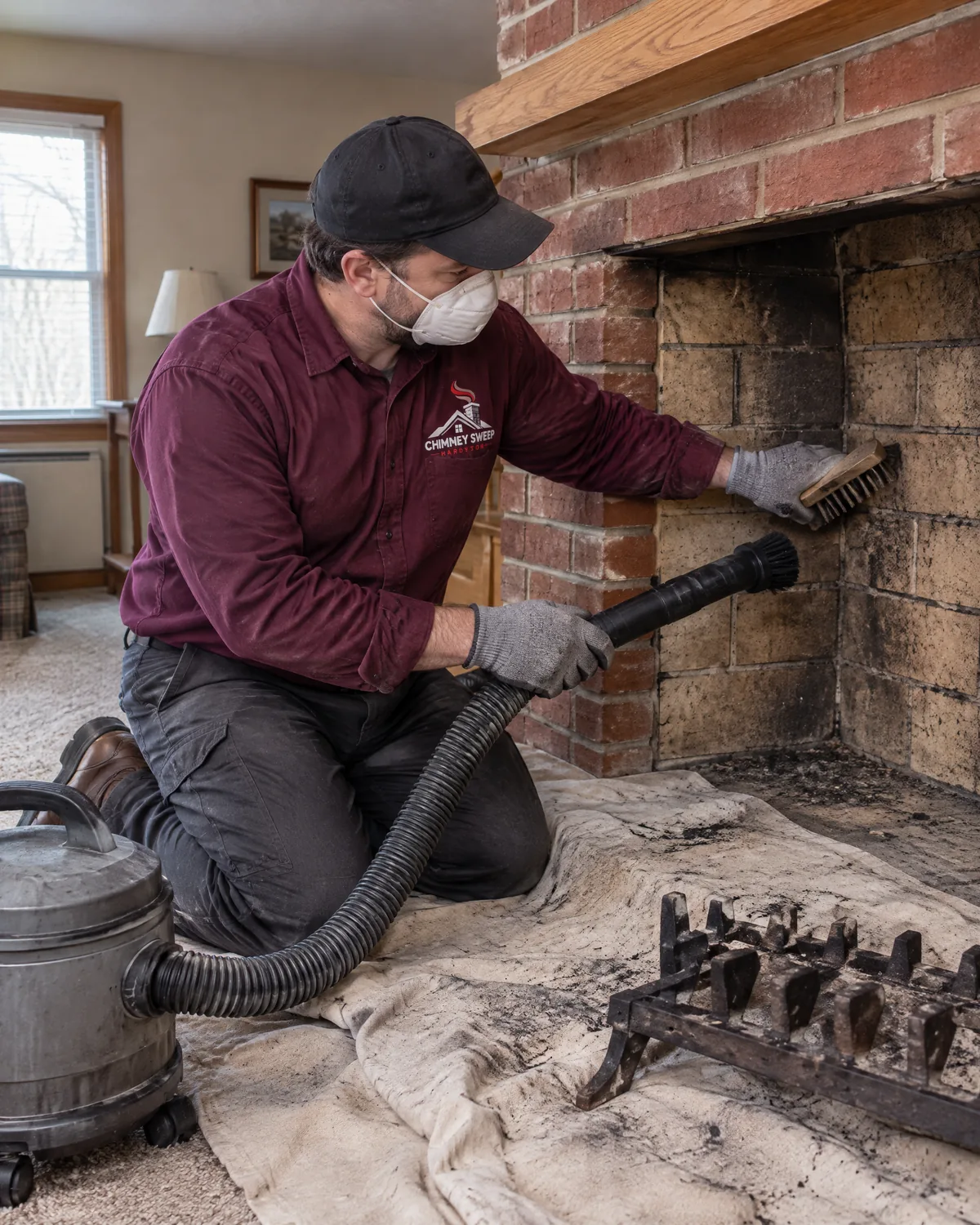
A fireplace cleaning focuses on the firebox and the space right above it. The room is protected with drop cloths, ash and debris are removed, and the grate and firebox are brushed and vacuumed. The damper and smoke shelf are cleared, glass doors are cleaned, and on a gas unit the logs, burner and glass are looked over.
CSIA notes that a complete chimney sweeping includes the flue and the smoke chamber, not only the firebox brick. When the flue also needs cleaning, that is handled as a full sweep during the same visit.
Any repair found along the way is explained before work starts, with photos where they help. Small fixes such as freeing a damper can often be done right away. Refractory mortar and parging need time to cure before the next fire.
To schedule, call (862) 362-1333 or choose Request Service.
Homeowner guide: Why Your Fireplace Smells When It Isn't in Use
Fireplace Repair & Cleaning questions
What is smoke chamber parging, and does my fireplace need it?
Parging is a smooth coat of heat-resistant material troweled over the inside of the smoke chamber, the funnel-shaped space above the damper. New Jersey's residential code, based on the International Residential Code, says a corbeled smoke chamber must be parged smooth. Rough, stepped brick there catches creosote and disturbs the draft, so a look above the damper shows if yours needs it.
Can I put vent-free gas logs in my prefab fireplace?
Only if that fireplace is tested, listed and labeled for vent-free logs. The International Residential Code's New Jersey edition does not allow an unvented gas log heater in a factory-built fireplace otherwise. Check the label inside the unit and the owner's manual first. If they do not permit it, vented gas logs or a listed insert are the usual alternatives.
Should the glass doors be open or closed while a wood fire burns?
Follow the manufacturer's instructions for your doors and fireplace, since designs differ. CSIA lists closing the glass doors among the ways a fire's air supply gets restricted, and restricted air speeds up creosote buildup. Many open masonry fireplaces burn best with the doors open and the mesh screen drawn. Closing the doors once the fire is completely out keeps room heat from escaping.
Book fireplace repair & cleaning in Hardyston
Tell us what you are seeing and the town you are in.