
Diagnosis · Homeowner guide
Why Your Fireplace Smells When It Isn't in Use
The usual sources of fireplace odor, why the smell gets stronger on humid days, how to tell one cause from another, and which fixes actually last.
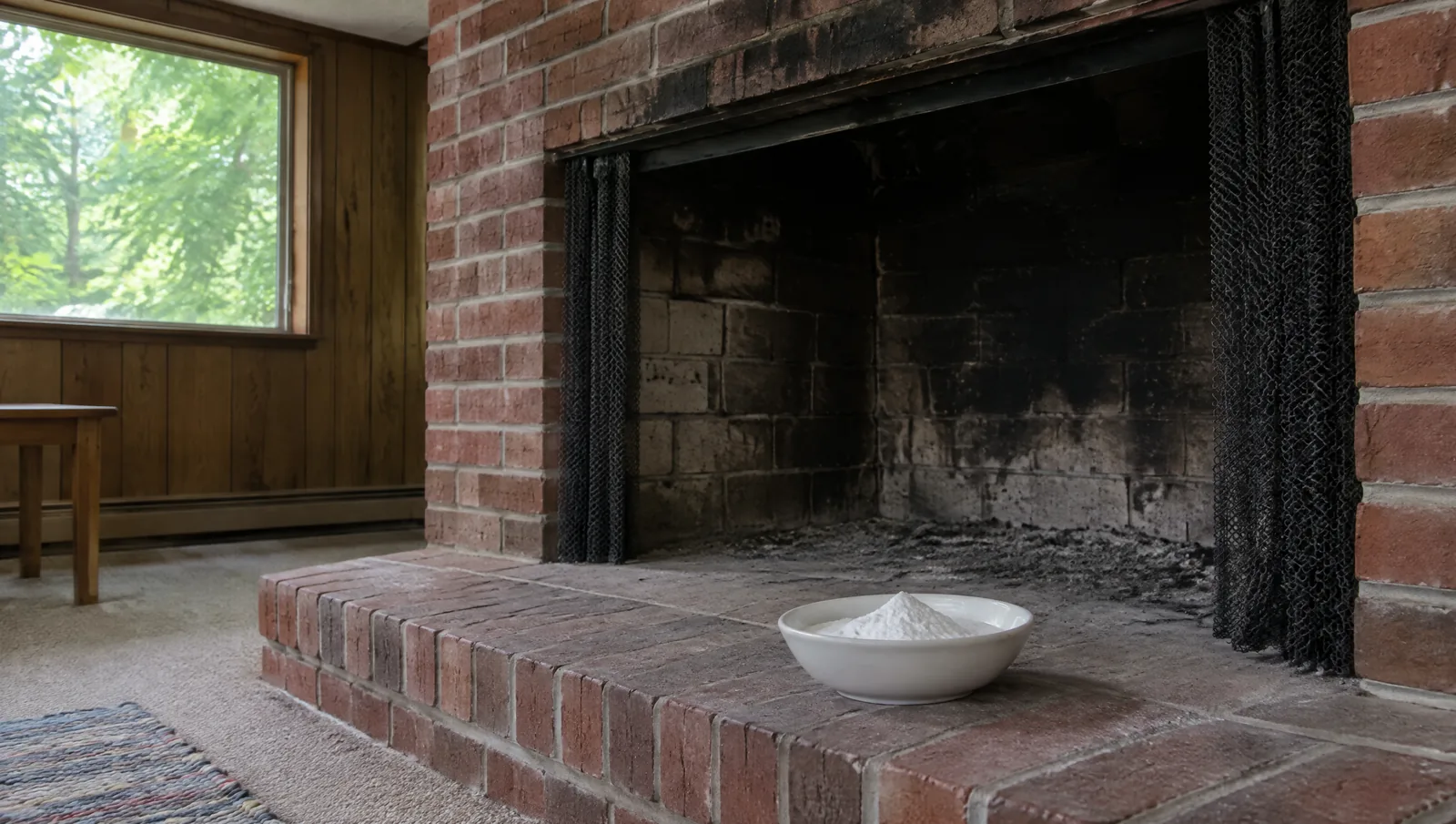
A fireplace that has not been lit in weeks can still fill a room with a sharp, smoky or musty smell. It tends to show up on a muggy afternoon or right after a storm, and opening the windows only helps for a while.
The odor nearly always has two parts. Something in the chimney gives off the smell, and something about the house pulls that air down into the room. Deal with only one of the two and the smell usually returns.
The usual source: creosote
Creosote is the residue wood smoke leaves on the inside of the flue and the smoke chamber. Even a chimney swept last year holds some of it, soaked into the masonry and the mortar joints.
CSIA explains that the odor is usually worse in summer, when humidity is high and the air conditioner is running. Damp air seems to wake the smell up, which is why the same fireplace can be odor-free on a dry January day and unpleasant in July.
A creosote smell is sharp and smoky, a bit like fresh asphalt or a campfire the morning after. It is strongest right at the fireplace opening and fades as you walk away.
Why the smell comes down instead of going up
A cold chimney does not draw the way a warm one does. When the house pulls outside air in through the chimney, the odor rides along with it. CSIA traces that downward airflow to pressure imbalances in the house as a whole.
Several everyday things lower the air pressure inside a home. Range hoods, bathroom fans and clothes dryers all push air outdoors, and that air has to be replaced from somewhere. A newer or well-sealed house has fewer small leaks, so an open flue becomes the easiest way in. A fireplace on the lowest floor is especially prone to this, because warm air leaking out near the top of the house draws replacement air in down low.
New Jersey's version of the International Residential Code requires fireplaces to have an exterior air supply unless the room is mechanically ventilated and controlled so the indoor pressure is neutral or positive. That rule is about combustion, but it points at the same issue. A fireplace needs a source of air other than its own chimney.
A five-minute test
On a day when the smell is noticeable, switch on the range hood, the bath fans and the dryer together. If the odor at the fireplace gets stronger within a few minutes, the chimney is acting as the home's air intake. Then open a window a few inches in the same room and see whether the smell fades.
Other things that make a fireplace smell
Creosote is the most common source, but it is not the only one. Each of these has its own character.
Water in the chimney
Rain running down an uncapped flue, through a cracked crown or past leaking flashing keeps the masonry and the smoke shelf wet. The result smells musty, more like a damp basement than a fire, and often comes with rust on the damper or stains around the opening.
Nests and animals
Nest material, droppings and stored food give off a sour, barnyard smell. An animal that has died in the flue produces a strong rotting odor that builds over days and can linger for weeks, often with flies near the fireplace.
Leaves and debris
Leaves, needles and twigs that blow into an open flue collect on the smoke shelf and slowly rot. On a wooded lot, a single autumn can leave a sizable pile.
Old ash
A firebox left full of ash through the warm months smells stale and smoky, more so when the ash gets damp.
Gas
A rotten-egg or sulfur smell near a gas fireplace is a different matter entirely. Natural gas and propane carry an added odorant so leaks can be noticed. Walk out without touching light switches or appliances, and make the call to the utility or 911 from the yard.
How to tell the causes apart
The kind of smell and the moment it appears narrow the list quickly.
- Smoky or tar-like, worse on humid days with the air conditioning on: creosote, helped along by negative pressure
- Musty or damp, worse after rain or snowmelt: water getting into the chimney
- Sour or animal-like, sometimes with scratching: a nest or droppings
- Strong, rotten and getting worse over several days: a dead animal
- Earthy and leafy, worst in fall: debris on the smoke shelf
- Rotten eggs near a gas appliance: a possible gas leak, so leave the house
Causes stack up
Two causes often work together. A damp chimney lined with creosote smells far worse than a dry one, and both smell worse when indoor pressure drops and air flows in through the flue. That is why fixing the source and stopping the airflow usually both need attention.
Fixes that work
The right fix depends on which causes you found. Most homes end up using two or three of these together.
Remove the source
A sweeping clears out most of the creosote, along with nest material and debris on the smoke shelf. CSIA notes that cleaning helps but usually will not get rid of the odor completely, which is why the airflow side matters too.
Stop air from coming down
A tight-sealing damper mounted at the top of the chimney closes the flue at the very top. CSIA says this kind of damper can reduce the air flowing down the chimney, and with it the odor. Make-up air works from the other side. CSIA suggests bringing some make-up air into the house somewhere else so air is not drawn down the chimney. Glass doors that close snugly also slow the flow into the room.
Keep water and animals out
A cap with mesh sides keeps rain, leaves and animals out of the flue. A cracked crown or leaking flashing should be repaired so the masonry can dry out.
Short-term relief
CSIA mentions that commercial chimney deodorants work fairly well, and that many people have good results with baking soda placed in the fireplace. These absorb or mask the smell while the real cause is fixed. On their own they are a stopgap.
When to have it looked at
Have the chimney and fireplace checked if the smell is new, keeps getting stronger, comes with stains or scratching sounds, or does not fade after a cleaning. CSIA points homeowners to the yearly inspection that NFPA 211 sets for chimneys, fireplaces and vents, and an odor that will not go away is a good reason to book it.
Bring along what you have noticed: when the smell appears, what it smells like, and whether fans or weather change it. Those details save a lot of guesswork.
Damper, glass door and smoke chamber problems that let odors into the room are covered on the fireplace repair and cleaning page, along with what a fireplace cleaning includes.