Technical · Homeowner guide
Switched From Oil to Gas? What Happens to Your Chimney
Why a chimney that vented an oil burner for years can run into trouble once a gas furnace or water heater takes over, and what to check after a conversion.
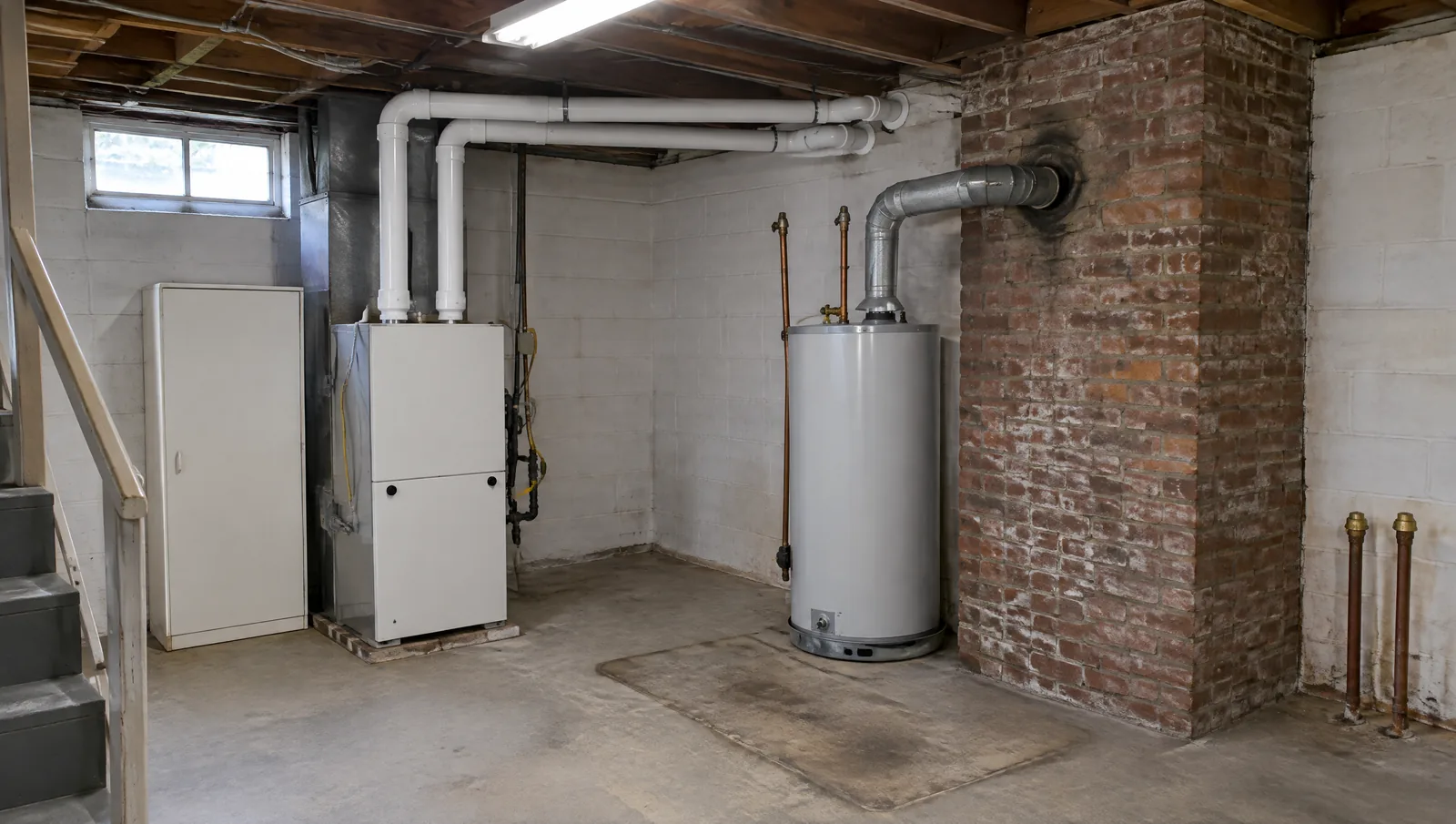
Converting from oil to natural gas usually means a new furnace or boiler, a gas line, and an empty spot where the oil tank used to be. The chimney often stays exactly as it was. That is where trouble can start, because a flue that suited an oil burner is not automatically right for gas.
This article explains what changes inside the chimney after a fuel switch, the problems that show up most often, and what to ask before or after the installer leaves. Most of it applies to propane conversions as well.
Oil and gas exhaust behave differently
Oil burners send soot up the flue, and over the years that residue coats the liner. That is why CSIA advises having an oil flue inspected every year. Gas burns much cleaner, so many homeowners assume the chimney's job just got easier.
In one sense it did. In another, it got harder. CSIA points out that modern high-efficiency gas furnaces produce exhaust with high levels of water vapor, and that the vapor carries chlorides picked up from the air the furnace draws from inside the house. The result is a more corrosive environment in the flue than the oil burner created. CSIA also notes that many gas appliances now vent into chimneys that once served oil furnaces, which is exactly the situation a conversion creates.
What happens to an old clay liner
Most masonry chimneys built for oil heat were lined with clay tile. Clay copes reasonably well with hot, dry exhaust. It copes less well with a steady supply of moisture and acidic condensate. CSIA warns that terracotta liners can flake under corrosive conditions, and that the flakes can fall and block the chimney.
The blockage usually forms at the bottom, out of sight, where the flue meets the cleanout or the connector pipe. A partly blocked gas flue does not announce itself with smoke the way a fireplace does. It can quietly spill exhaust into the basement instead, which is why the liner's condition matters more after a conversion, not less.
- Flakes or chunks of tile in the cleanout at the base of the chimney
- Water or rust stains on the metal vent connector
- White crust or damp patches on the outside of the chimney
- Mortar crumbling out of the joints near the top of the stack
- A carbon monoxide alarm that sounds while the furnace or water heater is running
Sizing: why a bigger flue is not better
An oil burner and a gas furnace rarely need the same size flue. CSIA notes that many chimneys are improperly sized for the appliances they serve, and a fuel change is one of the most common ways that happens.
Gas exhaust runs cooler and wetter than oil exhaust. In an oversized flue it moves slowly and loses heat to the masonry before it reaches the top. Natural Resources Canada explains that flue gas condensation can damage a chimney's interior wall, and that water in a chimney can signal a serious condensation problem. Its suggested remedy is an approved metal liner that reduces the size of the flue. A smaller passage keeps the exhaust moving and warm enough to leave as vapor rather than run back down as water.
The water heater left behind
Many conversions install a high-efficiency condensing furnace or boiler. These usually vent through plastic pipe out a side wall, so they stop using the chimney altogether. The gas water heater often stays connected to the old flue by itself.
That leaves a small appliance venting into a chimney built for something much larger. A Contractor Magazine article on these orphaned water heaters explains that big old masonry flues cause sustained condensation when a water heater is left on its own, and that an unlined masonry chimney in that situation needs a properly sized liner. The article cites a guideline that a chimney's area should be no more than seven times the area of the appliance's vent pipe. A typical older masonry flue is far larger than that for a water heater, which is why the mismatch is so common.
Inspection before or right after the switch
CSIA ties a Level II inspection to a change in the fuel a home burns. That kind of inspection adds the accessible parts of the attic, basement and crawl space to a routine check, and it can include a video look inside the flue, which is the practical way to judge a liner from the inside.
Ideally the chimney is inspected before the new equipment goes in, so the installer knows whether to plan for a liner. If the conversion is already finished, an inspection during the first heating season catches condensation and liner damage while they are still small.
- Will the new furnace or boiler vent into the chimney or out through a side wall?
- If the water heater stays on the chimney, has the flue been sized for it alone?
- Does the plan include a liner, and if so, what material and diameter?
- Who will clear out old oil soot and debris before the new appliance is connected?
- Who is checking the cap and the top of the flue?
If your home is in Hamburg, where utility gas heats about half of homes, our page on chimney service in Hamburg explains how gas flues, liners and caps in the borough are checked.
Cleaning out the oil years
Before gas exhaust starts flowing up a chimney that served oil, the old soot should come out. Left in place, that layer can loosen, drop to the base of the flue and add to any tile debris already sitting there. A sweep at the time of the conversion gives the new appliance a clean, inspected path.
Gas flues still need attention afterward. CSIA advises scheduling annual inspections for all chimneys, gas furnaces included, because nests, leaves and debris can block a flue whatever fuel it carries.
What a relined chimney looks like
The usual fix is a stainless-steel liner run from the appliance connection to the top of the chimney, sized for the appliance it serves and finished with a cap. On a chimney that climbs an outside wall, the liner may also be insulated. CSIA notes that gas and oil appliances venting into an exterior chimney benefit from that insulation because the flue stays warmer.
From the street, a relined chimney looks almost the same, apart from a new cap. The change is inside, where the exhaust now travels through a passage matched to the appliance. That is the part that protects the masonry and the people living in the house.