Maintenance · Homeowner guide
Oil Heat and Your Chimney: Soot, Corrosion and Annual Checks
What builds up in an oil flue, why it matters, and how to fit chimney care into the yearly routine you already keep for the burner.
An oil furnace or boiler is easy to forget about until it stops. The chimney behind it is easier still to forget, because nobody watches it work. Yet every gallon burned sends its exhaust through that flue, and some of what it carries stays behind.
This guide covers what accumulates in an oil-heated chimney, how it causes trouble, and how a homeowner can keep the burner and the chimney on the same yearly schedule without much fuss.
What an oil burner leaves behind
Fuel oil never burns perfectly. Even a well-adjusted burner produces fine black soot, and one that is out of adjustment produces much more. CSIA describes soot deposits building up on the inside wall of the chimney liner, and warns that too much of it can cause chimney fires, deterioration of the flue and blockages.
Sweeps also find crusty, flaky material mixed in with the soot, often called scale. As it loosens, it drops toward the base of the flue. On its own a thin film is normal. A thick layer, or a pile of flakes at the bottom, tells you the flue has gone too long between cleanings.
Why the base of the chimney matters
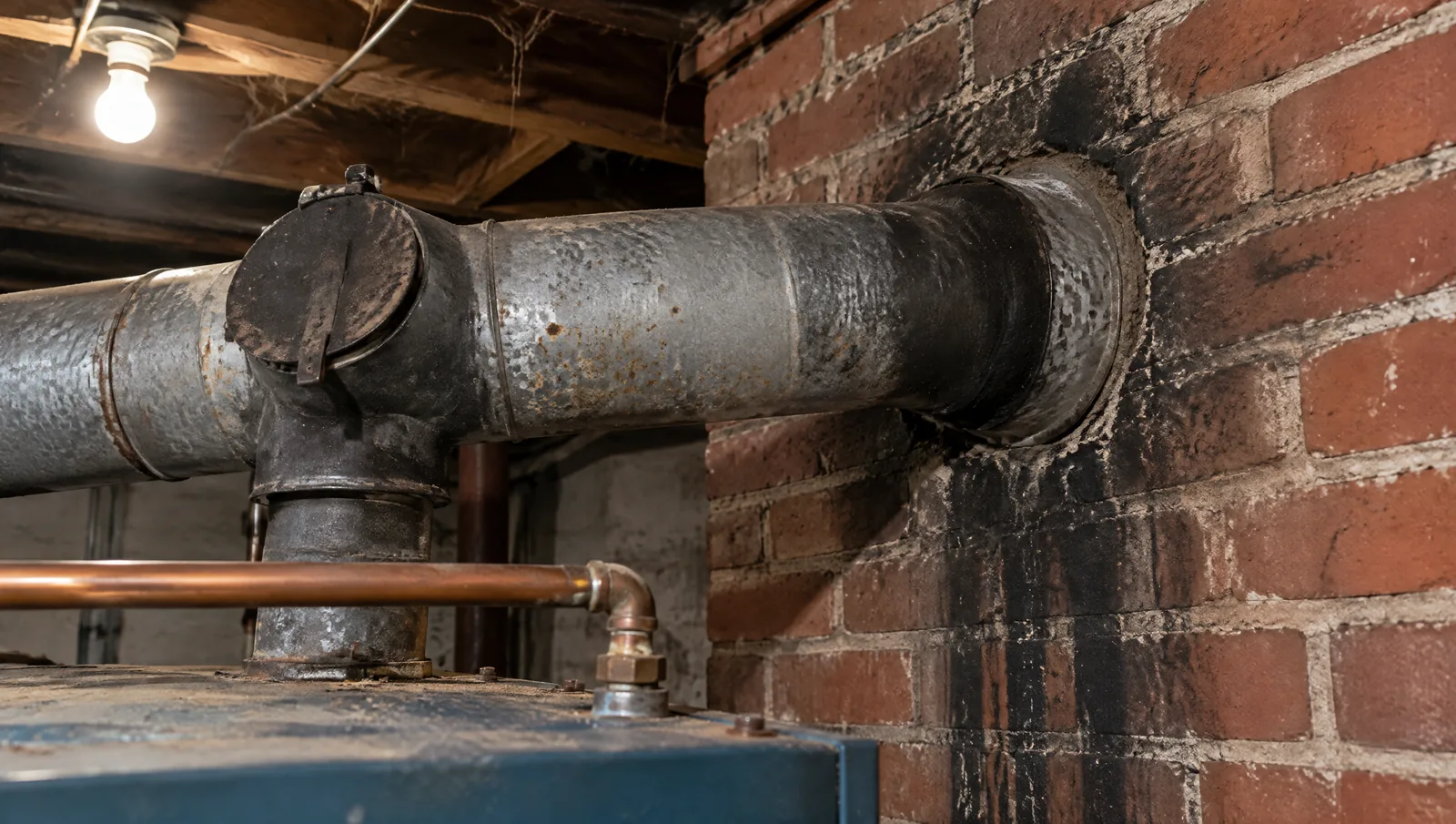
Most oil-heated houses have a small cleanout door near the bottom of the chimney, usually in the basement. Whatever falls down the flue collects there, below the point where the burner's pipe enters. When enough piles up, it reaches that opening and starts to restrict the exhaust.
A restricted flue weakens the draft the burner depends on. Combustion gets worse, more soot forms, and in the worst case fumes spill back into the house. That cycle explains how a little neglect can grow into a larger problem over a few winters.
- Look for soot stains around the edges of the cleanout door
- Check the pipe between the burner and the chimney for rust, holes or loose joints
- Note any soot on the wall or floor around the burner
- Listen for a rumble or a puff when the burner starts
- Keep carbon monoxide alarms working and test them regularly
The tune-up and the sweep are separate jobs
Many homes have the oil burner serviced each year by a heating company. That visit centers on the burner itself, including the nozzle, filters, electrodes and combustion settings. Natural Resources Canada states that oil-fired furnaces and boilers require annual cleaning and tuning.
The chimney sweep covers everything after the exhaust leaves the appliance: the connector pipe, the flue and its liner, the cleanout, the top of the chimney and the cap. Doing both in late summer or early fall, with the sweep first, gives the heating technician a clean flue to test the draft against. One without the other leaves half the system unchecked.
In Franklin Borough, where fuel oil heats about half of homes, our page on chimney sweeping and inspection in Franklin explains how oil flues and older liners in the borough are cleaned and checked.
Corrosion and the clay liner
Many oil-heated chimneys rely on clay tile liners. Over decades, deposits, moisture and repeated heating and cooling wear at the tiles and at the mortar between them. Cracks open, joints erode, and pieces of tile end up in the cleanout.
A damaged liner is more than a cosmetic issue. CSIA's guidance on carbon monoxide notes that terracotta liners can flake under corrosive conditions and produce debris that blocks the chimney. A camera inspection is the dependable way to see the liner, because most of its length cannot be viewed from either end.
Water from outside makes it worse
Not every problem starts with the burner. Rain and snow soak into an unprotected crown and porous brick, and freezing weather breaks the masonry apart over time. Water that reaches the flue can mix with soot deposits and speed up the wear on tile and mortar.
A cap keeps direct rain out of the flue. A sound crown and good flashing keep water out of the brick. Neither has anything to do with the burner, yet both belong in an oil chimney's yearly checklist.
What a yearly oil flue check should cover
The annual visit should leave you with a clear picture of the chimney, not just a cleaner flue. NFPA 211, as quoted by CSIA, calls for chimneys, fireplaces and vents to be inspected at least once a year for soundness, freedom from deposits and correct clearances. The U.S. Fire Administration gives the same advice, recommending that heating equipment and chimneys be cleaned and inspected every year by a professional.
- Soot and scale removed from the flue, the connector and the cleanout
- The liner checked for cracks, gaps and missing pieces, by camera where needed
- The connector pipe checked for rust, holes and secure joints
- The cap, crown and flashing checked from the roof
- Other appliances sharing the chimney, such as a water heater, noted and checked
- Notes or photos you can file with the burner service records
When to call sooner
Some signs should not wait for the yearly visit. Soot puffing out around the burner or the cleanout door, a strong oily or smoky smell in the basement, a carbon monoxide alarm, or a burner that keeps shutting itself off are all reasons to stop and have the heating company and a chimney professional look at the system.
The chimney also deserves a fresh inspection whenever the house changes heating equipment, adds a wood stove or replaces the boiler. A new appliance may need a different flue size or a different liner than the one the old burner used.