Chimney Repair in Hardyston, NJ
Chimney repair in Hardyston, NJ usually starts with water. Rain, snowmelt and hard freezes work on the brick, mortar, crown and flashing at the top of the house, and the damage tends to show up indoors long after it began outside. This page explains how to tell what is failing, what each repair involves, and when patching stops making sense.
Chimney Sweep Hardyston repairs chimneys across Hardyston Township and the nearby Sussex County communities. Call (862) 362-1333 or request service online and describe what you are seeing. A stain, a loose brick or a drip in the firebox are all useful clues.
Repair now, rebuild, or keep an eye on it?
Worn joints, small cracks
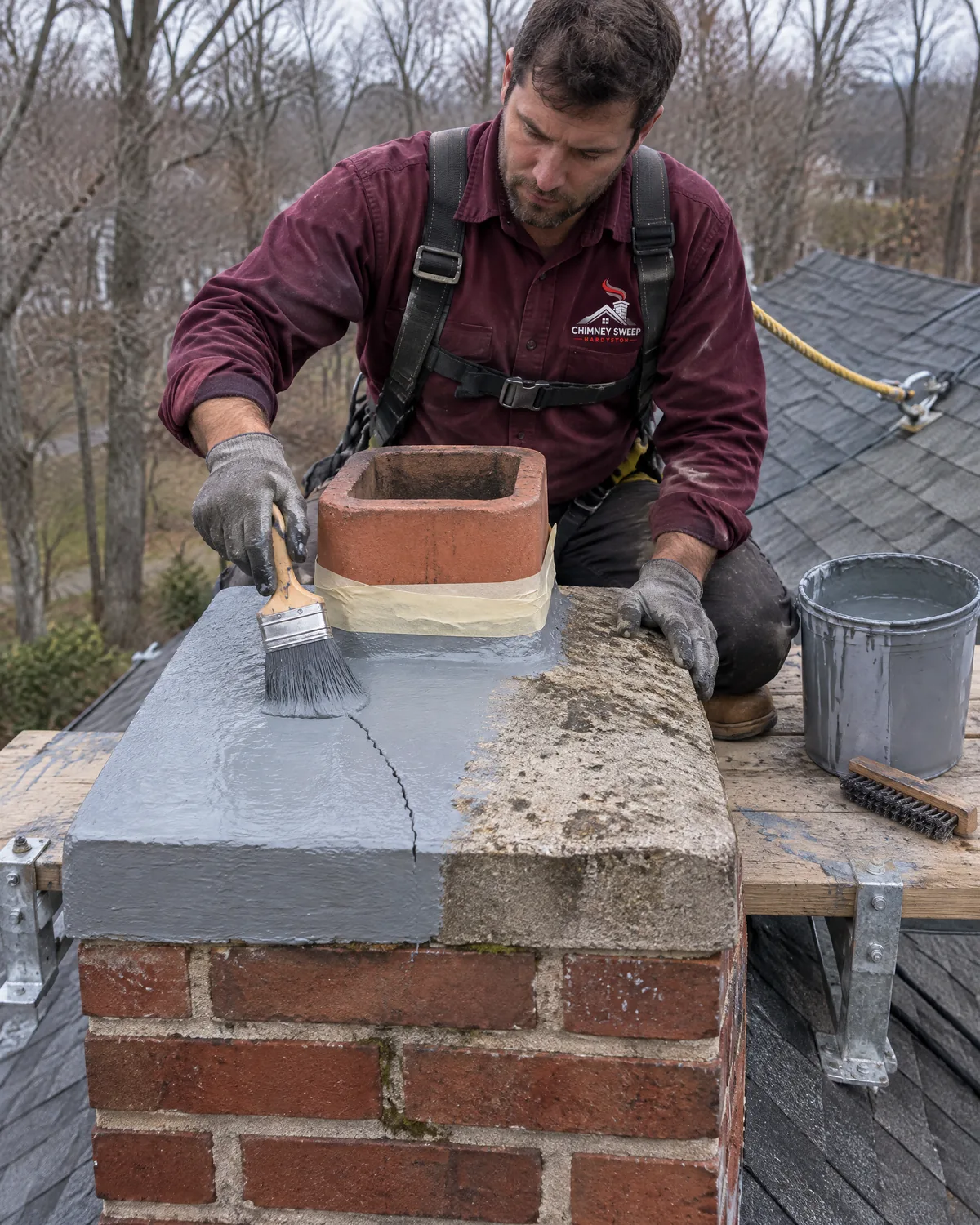
Repointing and crown sealing are usually enough when the brick itself is still hard and only the mortar or the crown surface is wearing.
Loose or flaking brick above the roof
Brick that crumbles, shifts or sheds its face often needs that section taken down and relaid. That is a partial rebuild.
Leaning stack or cracks through the structure
This points to a structural problem. Stop using the fireplace or stove until the chimney has been checked closely.
Water inside, masonry looks fine
Check the flashing, the cap and the crown first. Many leaks come in at the roofline rather than through the brick.
Signs your chimney needs attention
Most chimney damage is slow. The Chimney Safety Institute of America (CSIA) says water causes more damage to masonry chimneys than fire, and that the process is easy to ignore until the problem is serious. That makes the early signs worth learning.
- Water stains on the ceiling or wall beside the chimney, often worst after wind-driven rain
- A damp, musty smell from the fireplace in humid weather
- Mortar joints that look recessed, sandy or missing
- Brick faces flaking off, called spalling, with chips collecting on the roof or in the gutter
- White, chalky deposits on the outside brick, a sign that water is moving through the masonry
- Rust on the damper, the fireplace doors or a metal cap
- Cracks across the crown, the slab at the very top of the chimney
- Pieces of clay tile or mortar landing in the firebox
- A chimney that leans or has pulled away from the siding
One sign or several
A single hairline crack can be minor. Two or three of these together usually mean water has been getting in for several seasons, and the hidden damage is often larger than what shows.
What wears a chimney down in a northern New Jersey winter
Hardyston sits in the state's northern highlands. The Office of the New Jersey State Climatologist describes this northern zone as colder than the rest of New Jersey, with snow possible from mid-October into late April. That long stretch of freezing nights and milder afternoons is hard on masonry.
Freeze-thaw, step by step
Brick and mortar are porous. Water soaks into tiny voids and then freezes overnight. Frozen water takes up about 9% more room than liquid water, according to a technical bulletin from the National Institutes of Health facilities office, and that pressure opens fine cracks.
The next thaw lets more water into the larger gaps, and the cycle repeats. After a few winters the face pops off the brick and the joints start to crumble.
Weak points at the top
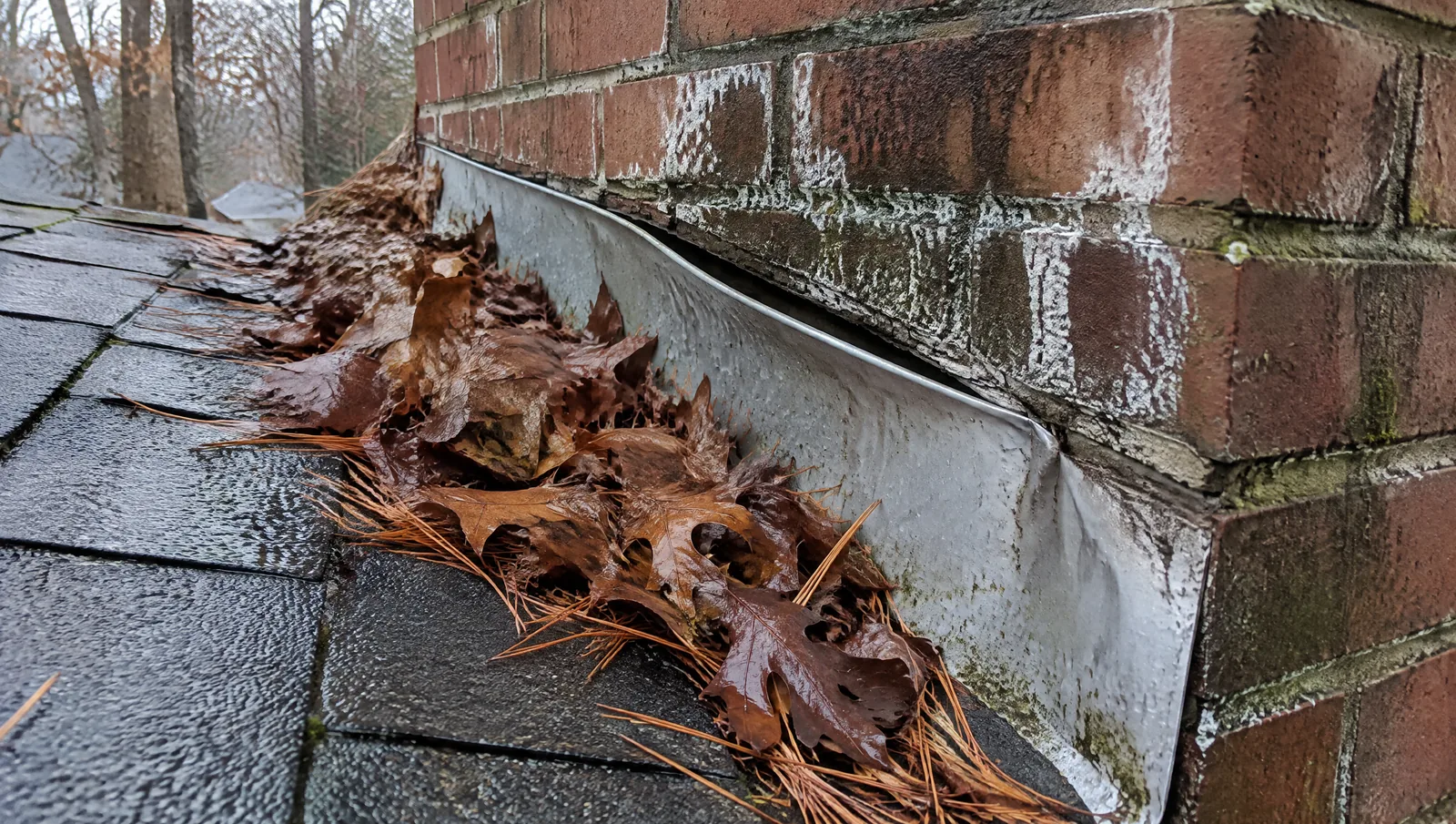
A crown with no overhang, or one made from a thin layer of sand and mortar, sheds water poorly and cracks early. Flashing that has lifted or lost its sealant lets water run down the chimney and into the roof framing.
Moisture from the inside
Water can also come from the flue. CSIA notes that high-efficiency gas appliances produce exhaust with high levels of water vapor, which makes the flue more corrosive when it condenses. An oil or gas appliance venting into an old, oversized masonry flue can keep the inside of the chimney wet for much of the heating season.
Trees and shade
On a wooded lot, branches drop leaves and needles onto the crown and keep the chimney top shaded. A chimney that stays wet longer simply goes through more freeze-thaw cycles.
Finding where a chimney leak really starts
A drip near the fireplace does not mean the brick is bad. Each source leaves its own pattern, and a careful diagnosis rules them out one at a time.
- Leak follows rain from one direction: suspect flashing
- Leak follows long soaking rain or snowmelt: suspect the crown or the masonry
- Leak follows the furnace or boiler running: suspect condensation in the flue
Flashing
Stains on the ceiling or wall right beside the chimney, worse in wind-driven rain, that often dry within a day. CSIA's Level 2 inspection procedure tells inspectors to look for water damage in the attic just below the flashing, because that is where this leak shows first.
The crown
Water on the smoke shelf or in the firebox, or damp brick in the attic that is wettest near the top. Cracks in the crown let rain soak straight down into the core of the chimney.
Brick and mortar
Damp patches spread over a wide area, white deposits on the outside, and staining at the shoulders where the chimney narrows. These leaks build slowly and get worse after long, soaking rains more than short storms.
The cap, or a missing one
Water dripping into the firebox during straight-down rain, sometimes with rust streaks. An open flue collects rain directly, and a rusting cap can stain the masonry below it.
Condensation
Moisture, staining or a sour smell near the base of the chimney or the cleanout door, worst in cold weather while the heating system runs, even during a dry spell. This is a venting problem, and new mortar will not stop it.
Chimney repair options for mortar, crowns and flashing
Most repairs fall into a few groups. The right one depends on how far the damage reaches, not on how bad the stain looks indoors.
Repointing worn mortar joints
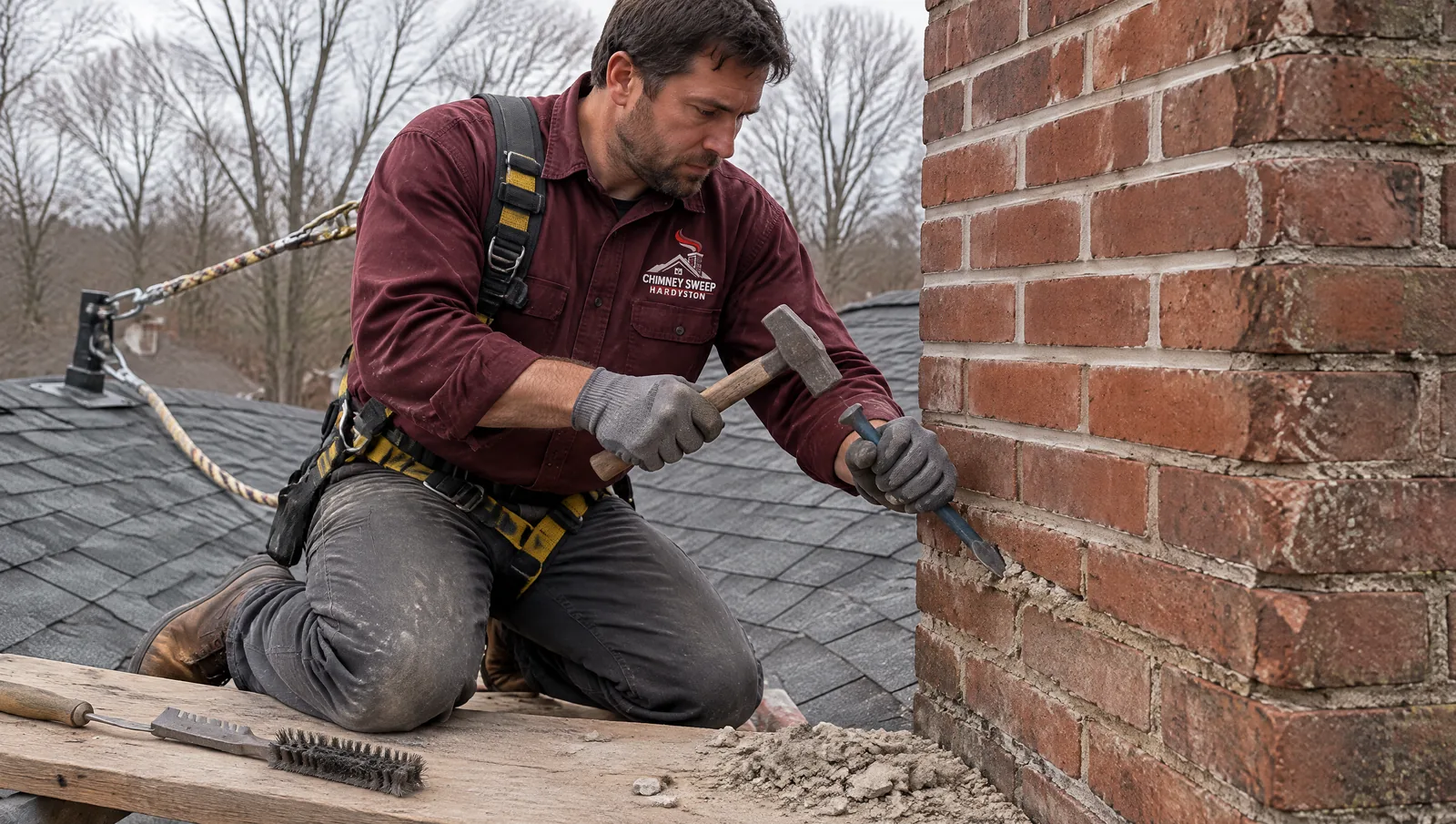
Repointing means cutting out failing mortar and packing in new mortar. The National Park Service's repointing guidance calls for removing old mortar to a depth of two to two and a half times the joint width, so the new mortar bonds instead of popping out.
The same guidance says new mortar should be softer than the brick. Hard, cement-rich mortar on older, softer brick traps moisture, and the brick face breaks off instead of the joint. You may hear this job called tuckpointing. Strictly, tuckpointing is a decorative raised joint, but many people use the word for repointing.
Sealing or replacing the crown
Hairline cracks in an otherwise sound crown can be sealed with a coating made for crowns. A crown that is broken through, crumbling or built flush with the brick usually needs replacing.
CSIA recommends a crown that projects about two inches past every side, and describes a cast crown with an expansion joint as a long-lasting replacement for the common sand-and-mortar wash. Its Level 2 procedure also notes that NFPA 211 calls for a bond break where the flue tile passes through the crown, so the tile can expand without cracking the slab.
Flashing repair
Flashing is the metal seal between the roofing and the chimney. A repair may mean resealing it, replacing the counter-flashing set into the mortar joints, or replacing the whole set during roof work. A wide chimney on the uphill side of a roof may also need a cricket, a small peaked diverter that steers water around it.
Crown, cap and chase cover are not the same thing
The crown is the concrete or masonry slab that tops a brick chimney and sheds water off its sides. The cap is the metal hood and mesh over the flue opening that keeps out rain, animals and sparks. A chase cover is the metal top on a framed chimney built around a factory-made flue, the kind finished in siding instead of brick. A cap does not replace a crown, and a crown does not stop rain falling straight down an open flue.
When a partial or full rebuild is the better fix
Repointing only works when the brick is sound. Once bricks are loose, cracked through or losing their faces, fresh mortar has nothing solid to grip.
A partial rebuild takes the chimney down to solid masonry, often to the roofline or a few courses below it, and lays it back up with new brick, mortar and a new crown. It is the usual fix for the section above the roof, because that part takes the most weather.
A full rebuild is for a chimney that leans, has cracks running through its structure, or has damage that continues into the attic or the house. It is a larger job, but patching a chimney that is moving only buys a little time.
The National Park Service offers a rule of thumb for masonry walls that fits chimneys well. When a quarter to half or more of a wall needs repointing, doing the whole wall can cost less than spot repairs. Past that point, piecemeal work stops being a saving.
- Bricks that move when pressed by hand
- A crown cracked through with spalled brick in the courses below it
- A visible lean or a gap opening between the chimney and the house
- Earlier repairs failing again within a few seasons
Can you keep using the fireplace before the repair?
Sometimes. Worn mortar on the outside of the stack does not stop a fire from venting. Damage that reaches the flue is a different matter.
Stop using the fireplace, stove or insert until it has been checked if you find pieces of flue tile in the firebox, see smoke escaping through the brick or into other rooms, or notice a leaning stack. A cracked liner can let heat and gases reach wood framing close to the masonry. CSIA also warns that clay liners can flake under corrosive conditions and produce debris that blocks the flue, which matters for any gas or oil appliance sharing the chimney.
After a chimney fire, a storm or any event likely to have damaged the chimney, CSIA's procedure recommends a Level 2 inspection, which includes a video scan of the flue interior. Keep working carbon monoxide alarms in the home, and stay off steep, wet or icy roofs.
What changes the cost of a chimney repair
There is no flat price for chimney repair, because no two chimneys share the same height, roof, materials or damage. These are the details that move an estimate up or down.
- Height above the roof. A tall stack needs more material and more time to work on safely.
- Roof pitch and access. A steep roof, a three-story wall or a chimney behind a deck may need extra staging or roof anchors.
- How far the damage goes. Work above the roofline is simpler than damage that continues into the attic or the living space.
- Which repair it is. Sealing a crown, repointing, replacing flashing and rebuilding the top courses involve very different amounts of labor.
- Materials. Matching older brick, a softer lime-based mortar, the flashing metal and a cast crown all change the materials list.
- Number of flues. A chimney serving a fireplace and a boiler has a larger crown and more joints to seal.
- Problems found once work starts, such as a cracked flue tile hidden under the crown.
- Season. The National Park Service's repointing guidance recommends wall temperatures between 40 and 95 degrees Fahrenheit, so cold-weather masonry work may need protection or a later date.
Reading an estimate
A useful estimate lists each repair separately so you can see where the cost sits, and it explains what was found. Ask for photos taken from the roof, since that is the part of the chimney you cannot easily see yourself.
What a repair visit should look like
A good repair visit starts with the whole chimney, not only the spot that leaks. That means a look from the roof, from the attic where it can be reached, and at the fireplace or appliance inside, with photos of what was found.
Next comes a written description of the problem and the repair recommended for it. Small jobs, such as resealing flashing or a crown, can often be finished in one trip. Repointing, crown replacement and rebuilds are scheduled for weather that lets mortar cure properly.
On the work day, the area around the fireplace and below the chimney is protected, and debris is bagged and carried off instead of being swept into the gutters. New mortar and concrete need time to cure, so you may be asked to hold off on fires for a short time afterward.
To schedule a look at your chimney, call (862) 362-1333 or use Request Service.
Homeowner guide: What Affects the Cost of Chimney Repair
Chimney Repair questions
Is a leaning chimney dangerous?
A visibly leaning chimney is a safety problem and should not be used until it has been checked, because the lean can mean a failing footing, badly deteriorated mortar or separation from the house. It can also open gaps in the flue that let smoke and gases escape. Keep people and cars clear of the side it leans toward and arrange an inspection promptly.
Should I waterproof my chimney brick?
A breathable masonry water repellent can reduce how much rain soaks into chimney brick, but it should only be applied after cracks, joints and the crown are repaired. The product must let water vapor escape. Paint or ordinary sealers that trap moisture inside the brick can make freeze-thaw damage worse, which is why the choice of product matters as much as the application.
What does spalling brick on a chimney mean?
Spalling means the face of a brick is flaking, popping off or crumbling, and on a chimney it almost always signals water getting into the masonry and freezing. Once the hard outer face is gone, the brick absorbs water even faster. Spalled bricks are usually cut out and replaced, and the water source, often the crown, cap or flashing, is fixed at the same time.
Book chimney repair in Hardyston
Tell us what you are seeing and the town you are in.