Chimney Inspection in Hardyston, NJ
A chimney inspection in Hardyston, NJ answers one practical question: is this chimney fit to keep working the way you plan to use it? How sure that answer can be depends on how far the inspector is allowed to look. NFPA 211, the fire-safety standard for chimneys, fireplaces, vents and solid fuel-burning appliances, sets out three levels of inspection. This page explains which one fits your situation, what each covers, and what the report should give you at the end.
Chimney Sweep Hardyston inspects chimneys serving fireplaces, stoves, inserts, boilers and furnaces across Hardyston Township and nearby Sussex County communities. Call (862) 362-1333 or use Request Service. Mention what is connected to the chimney and what prompted the call, such as a home sale, a new stove or a recent storm.
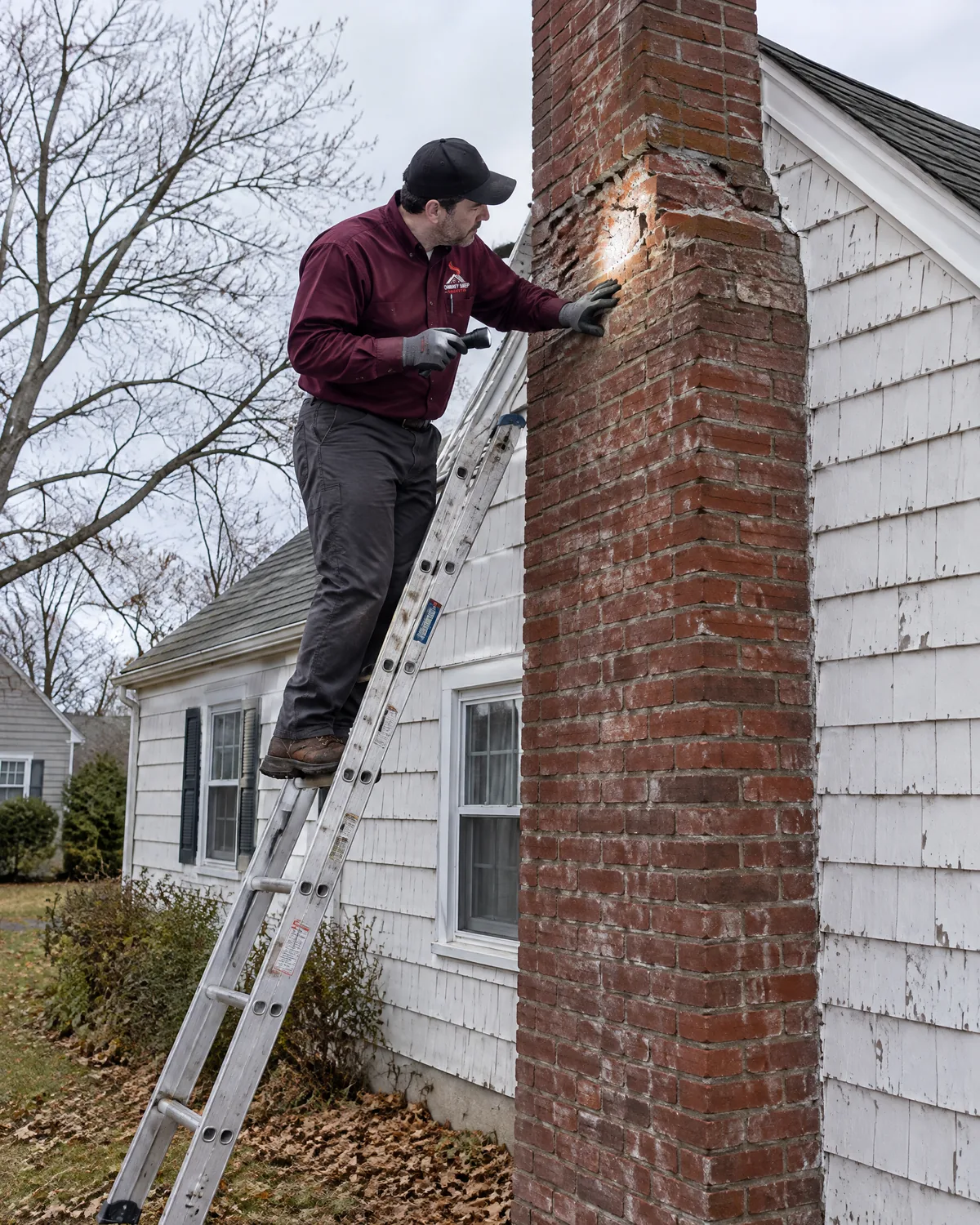
Which inspection level fits your situation?
Same appliance, same use
Level 1. It is the routine yearly check, usually done with a sweep, for a chimney that will keep working exactly as it has.
Selling, buying or changing something
Level 2. A property sale, a new appliance with a different fuel, efficiency or type, or plans to reline all call for it.
After a chimney fire, storm or malfunction
Level 2, with a video scan of the flue, before the fireplace or heating appliance is used again.
A hazard nobody can see
Level 3. It reaches concealed parts of the chimney and is only used when a Level 1 or 2 points to a hidden problem.
When a chimney inspection is due
The baseline is once a year. CSIA quotes NFPA 211 directly on this: chimneys, fireplaces and vents shall be inspected at least once a year. That includes the chimney behind a gas furnace, not only the one above a wood fireplace.
Certain events call for a closer look before the next yearly visit. CSIA's Level 2 procedure names them, and they are worth knowing before you plan any change to the house.
- A new appliance is being added, or an old one replaced with a different fuel, efficiency or type
- A Level 1 check could not settle whether the venting system is safe to keep using
- The house is being sold
- You plan to line or reline the chimney
- There has been a chimney fire or a fire in the building
- Severe weather, an earthquake or an appliance malfunction may have damaged the chimney
Swapping like for like
Replacing a worn-out stove with a similar new one, used the same way, is normally a Level 1 situation. CSIA's procedure describes Level 1 as fitting a chimney that will continue to be used as it has been, without a significant change.
Buying or selling a house in Hardyston
A sale is one of the triggers CSIA names for a Level 2 inspection. It is also the point where many buyers assume the chimney has already been checked.
New Jersey home inspectors work under the standards of practice in N.J.A.C. 13:40-15.16. Those rules cover the outside of the chimney and the fireplace, but they exclude the interiors of flues and chimneys and do not call for draft testing. A clean home inspection report says very little about the liner.
Hardyston's Fire Prevention Bureau issues the certificate a seller needs, and it covers smoke alarms, carbon monoxide alarms and portable fire extinguishers. The bureau's page says nothing about chimneys. If you want to know what is inside the flue, a chimney inspection is a separate step for the buyer or the seller to arrange.
Level 1, Level 2 and Level 3 chimney inspections compared
The three levels differ in where the inspector is allowed to go and what tools they may use. Each level includes everything in the one below it.
Level 1: the readily accessible parts
CSIA's procedure calls Level 1 the right level for routine cleanings and annual inspections. Readily accessible means reachable without tools to open a panel and without a ladder.
The inspector checks the appliance or fireplace, the damper, the connection into the chimney and the clearance to anything combustible. Then they look up the flue with a light to confirm it is clear and capable of continued use. A camera is optional at this level.
Level 2: the roof, the attic, the basement and a video scan
Level 2 widens the access. Ladders and common hand tools are allowed, and the procedure requires the inspector to go on the roof and into accessible attics, basements and crawl spaces.
It covers every flue in the chimney and each appliance connected to them. A video scan of the flue interior is required. CSIA adds that a smoke test or a pressure test may be part of it.
Level 3: concealed areas
Level 3 is for a hazard that the first two levels suggest but cannot confirm. CSIA describes it as checking the construction and condition of concealed parts of the chimney structure and flue.
Neither Level 1 nor Level 2 removes permanently attached parts of the building. Reaching concealed areas can mean exactly that, which is why Level 3 is uncommon and is reserved for a specific suspected problem.
Which level to ask for
If nothing has changed and nothing has happened, ask for a Level 1 with your yearly sweep. If something has changed, is about to change, or went wrong, start with a Level 2. Nobody should open up a wall or a chimney without a Level 2 that explains the reason.
What happens during a chimney inspection visit
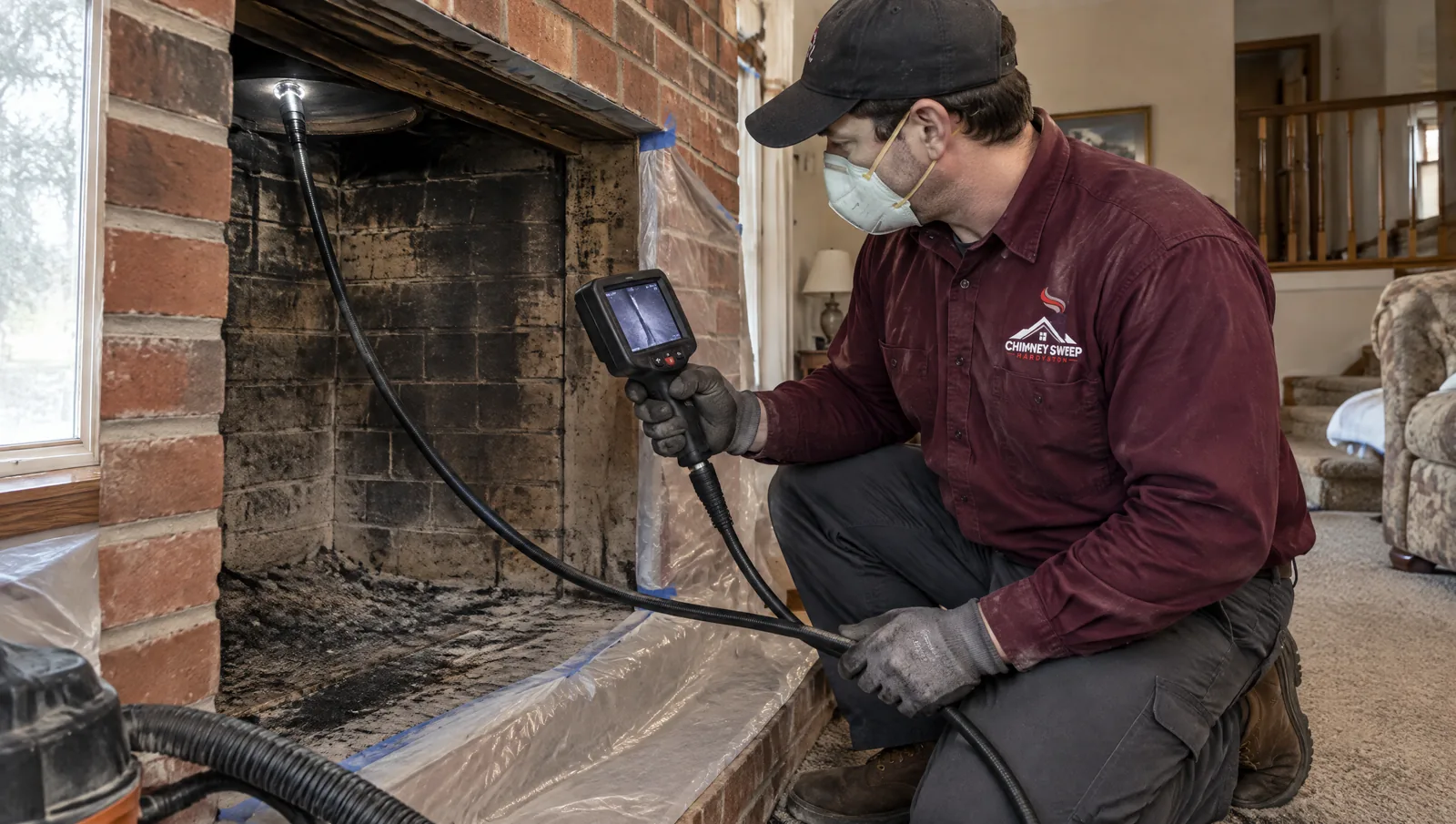
Most visits start indoors. Drop cloths go down first, and the fireplace or stove is looked over before anything is disconnected or scanned. With a stove, the inspector may take the stovepipe off at the chimney to see into the flue, and will read the label or the manual for the clearances that model needs.
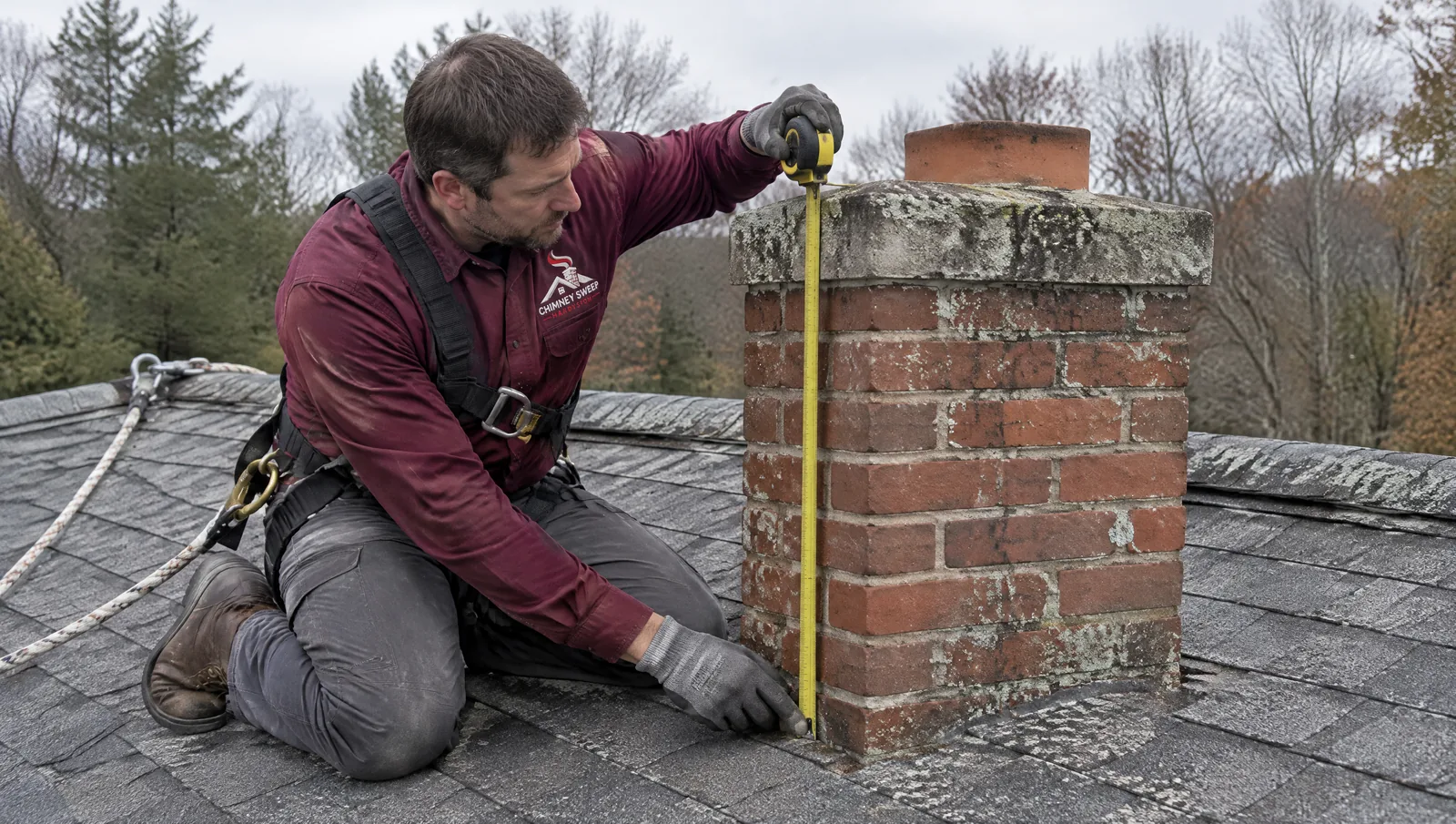
At Level 2 the visit continues outside and through the house. That means the roof and the top of the chimney, the attic where the chimney passes through the floor and roof framing, and the basement or crawl space at the base of the flue.
How the camera scan works
The camera is a small video unit on the end of sweep rods. It is lowered from the top or run up from below, and the picture shows on a monitor as it travels. CSIA says the scan checks flue tiles for cracks and mortar joints for failure, and that pictures can usually be downloaded afterward.
The Level 2 procedure also asks the inspector to watch for unused openings into the flue, called thimbles, and to note any offset where the flue bends or gets narrower.
What a camera cannot show
A camera sees the inside face of the flue. It cannot see the space between the outside of the chimney and framing hidden behind a finished wall, and it may not get past a tight offset or into a very small flue. When a scan is not possible, CSIA's procedure tells the inspector to say so in the report. That note matters, because a gap in the scan is not a clean result.
Common problems an inspection is designed to catch
Hardyston has a real mix of housing ages. Census estimates put the median year built here at 1985, with about 45% of homes built before 1980. A chimney from that era can still be sound, but it has been through a lot of winters and often more than one heating system.
Cracked or displaced flue tiles
CSIA explains that a chimney fire can reach about 2000°F, and the sudden heat cracks tiles and displaces mortar. That opens a path toward the wood frame of the house. Many chimney fires are never noticed at the time, so the damage is often found during a later scan.
A flue that no longer suits the appliance
Many gas appliances now vent through chimneys built for oil furnaces. CSIA notes that modern high-efficiency gas furnaces produce exhaust with high levels of water vapor, which makes the flue more corrosive. Old clay tiles can flake under those conditions and drop debris that blocks the flue. A Level 2 inspection confirms whether the flue is sized for the way it is used now.
Water at the top and in the attic
From the roof, the inspector checks the crown, the flashing and any cricket. NFPA 211 calls for a bond break where the top tile passes through the crown. In the attic, the Level 2 procedure looks for water damage just below the flashing and staining where the chimney's shoulder tapers.
Openings and clearances
Unused thimbles should be sealed. In the attic, the inspector checks the clearance where the chimney passes through the floor and roof framing, and looks for electrical wiring in contact with the masonry.
Findings that mean the fire should stay out
Some findings are notes for next season. Others mean the fireplace, stove or heating appliance should not run until the problem is fixed.
- Cracked or collapsed flue tiles, or tiles with large pieces missing
- Smoke escaping through the mortar joints of the brick or the liner
- A blocked flue serving a furnace or boiler, whether from a nest or fallen tile
- Signs of a past chimney fire. CSIA advises not using the chimney until it has been swept and evaluated.
- A connector that has come loose where it enters the chimney
Carbon monoxide
A blocked or leaking flue can push exhaust back into the house. The U.S. Fire Administration recommends carbon monoxide alarms in a central spot outside each sleeping area and on every level of the home.
The CDC lists headache, dizziness, weakness, upset stomach, vomiting, chest pain and confusion as common symptoms, and notes they are often described as flu-like. If an alarm sounds or people feel this way while the heat is running, get everyone into fresh air and call for emergency help.
What changes the cost of a chimney inspection
The level drives most of the difference. A Level 1 done with a sweep is mostly indoor work. A Level 2 adds the roof, the attic, the basement, every flue and a recorded scan, and a Level 3 depends entirely on what has to be opened.
- Which level is needed, and whether a Level 3 opening is involved
- How many flues the chimney holds, since Level 2 covers each flue and its appliance
- Roof pitch, chimney height and how safely the top can be reached
- Whether the attic, basement and crawl space can be reached
- How dirty the flue is. CSIA's Level 1 procedure notes that a heavily coated flue has to be swept before the liner can be judged.
- Offsets and flue size, which can slow the camera work
- What you receive: photos, saved video and written recommendations
From inspection report to repair plan
An inspection is only useful if you can act on it. CSIA's procedures tell inspectors to talk the findings through with you, give you a copy of the report and ask you to sign it, which records that you were told what was found.
Use this checklist when the written report arrives. A complete one shows:
- The level performed and the date
- Every flue and appliance checked, and any left out, with the reason
- Areas that could not be reached, such as a sealed attic, and why
- Photos of anything irregular, labeled with the date and the address
- The flue's inside size and height, and whether it suits the appliance
- The condition of the crown, flashing, cap and liner
- Each problem in plain words, with the repair recommended for it
- A clear statement of anything that should not be used until repaired
When the report recommends more work
If a Level 1 turns up signs of a chimney fire, CSIA's procedure has the inspector photograph them before sweeping and recommend a Level 2. A declined recommendation is noted on the report.
If a Level 2 is done because you plan a new appliance or a reline, the report should give the flue size the new setup needs, along with anything else required to vent it properly. That figure is what any liner or appliance quote should be built on.
Homeowner guide: Chimney Inspection Levels 1, 2 and 3 Explained
Chimney Inspection questions
My fireplace hardly gets used. Does it still need a yearly inspection?
Yes, a yearly inspection still applies, because NFPA 211 calls for chimneys, fireplaces and vents to be inspected at least once a year whatever the use. A flue that sits idle is often the one where birds nest, rain gets in unnoticed or a cracked tile goes unseen. When nothing about the setup has changed, a Level 1 is usually enough.
How should I get my house ready for a chimney inspection?
Stop using the fireplace or stove the day before so it is cold when the inspector arrives, and clear the hearth and the floor in front of it. For a Level 2, make sure the attic hatch, the basement and the cleanout door can be reached. If you still have the manual for your stove or insert, set it out, because its required clearances come from it.
Does each flue in my chimney need to be inspected?
Yes, a Level 2 inspection covers every flue in the chimney and the appliance connected to each one, not only the fireplace you use. CSIA's procedure also has the inspector look down neighboring flues from the top and note obvious damage. A furnace or water heater flue sharing the same stack can fail quietly, so it deserves the same attention.
Book chimney inspection in Hardyston
Tell us what you are seeing and the town you are in.