Homeowner Guide · Homeowner guide
Chimney Inspection Levels 1, 2 and 3 Explained
Where the inspector goes at each level, what you will see while they work, and how to make sense of the report they leave behind.
Chimney inspection levels sound like paperwork until someone is standing in your attic with a flashlight. The level decides how much of your house the inspector gets to see, which tools come out, and how much the report can honestly tell you.
The three levels were written into NFPA 211, the National Fire Protection Association standard that covers chimneys and the appliances venting into them, in January 2000. This guide follows an inspector through each one, then explains the words, notes and photos you are likely to find on the report.
Level 1: an inspection you can watch from the couch
A Level 1 happens mostly in the room with the fireplace or stove, and it is the level that usually comes along with a yearly sweep. CSIA's procedure limits it to what is readily accessible, meaning anything reachable without unscrewing a cover or climbing a ladder.
Drop cloths go down first. The inspector looks over the appliance itself: door gaskets, the glass, the baffle inside a stove, and any cracks or rust. They work the damper to be sure it moves freely. On a stove they often disconnect the stovepipe from the chimney, shine a light up the flue and open the cleanout door at the base. Debris at the bottom previews what is happening higher up.
For a wood stove, they will also measure the hearth pad. CSIA's procedure looks for floor protection extending 18 inches beyond the stove in every direction, unless the stove's listing says otherwise. It helps to have a few things ready before they arrive.
- The manual or data plate for your stove or insert, which lists its required clearances
- Anything about the setup that has changed since the last visit
- Which flues in the chimney are actually in use
Level 2: up on the roof and down in the basement
A Level 2 is the same visit with the rest of the house opened up. Ladders and ordinary hand tools are allowed, and CSIA's procedure sends the inspector onto the roof and into any accessible attic, basement or crawl space. Expect someone to need the attic hatch and the area around the base of the chimney.
On the roof
At the top, the crown gets a close look, along with the metal flashing at the roofline and any cricket, the small peaked diverter on the uphill side. They measure the inside of the flue and its full height, make sure the rain cap is not restricting the opening, and judge whether the chimney rises high enough. For comparison, the International Residential Code asks for at least 3 feet above where the chimney passes through the roof, and 2 feet higher than any part of the building within 10 feet.
In the attic
This is where the chimney passes through floor and roof framing. The inspector checks the clearance to that framing, looks for electrical wiring touching the masonry, and looks for water stains, especially just below the flashing.
In the basement or crawl space
At the base, they check that the cleanout door closes tightly, look at where a furnace or boiler connector enters the chimney, and inspect the clay thimble around it once the connector is off.
The camera
A video scan of the flue is required at this level. You can usually watch the monitor as the camera travels. CSIA notes that some Level 2 inspections also include a smoke or pressure test to show where gases escape.
Level 3: when part of the structure has to be opened
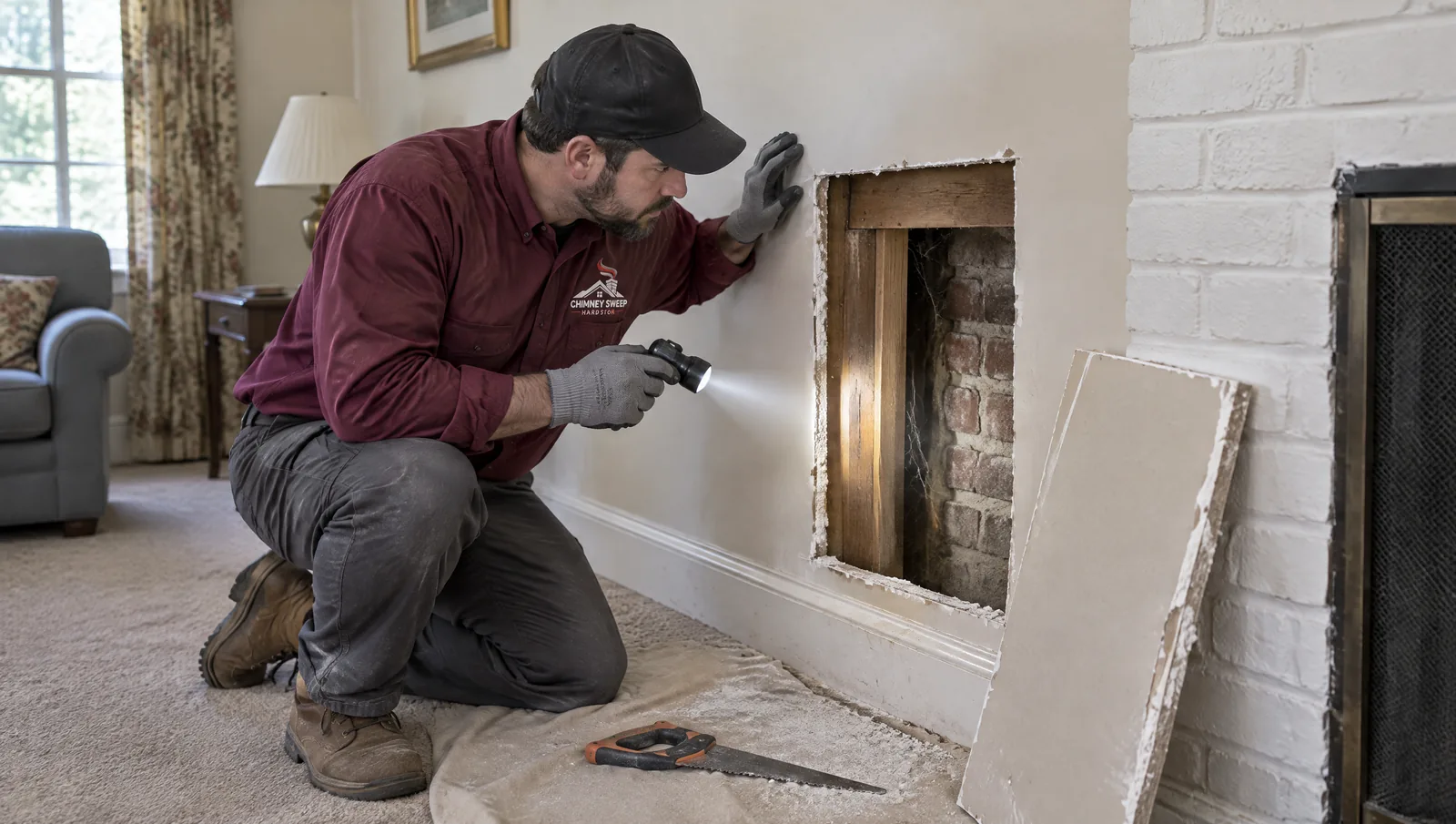
Level 3 is not a longer Level 2. It exists for one situation: an earlier inspection points to a hidden hazard that cannot be checked without getting at concealed parts of the chimney or flue.
Levels 1 and 2 never take apart anything built permanently into the house, so a Level 3 may have to. Before it starts, you should get a clear explanation of what will be opened, why, and how it will be closed up again, and you should agree to it in writing. Most homeowners never need one.
How to read the findings
A chimney report mixes checkboxes, short notes and photos. Reading it in this order keeps the important parts in view.
Start with the level and the scope
Check which level was done and which flues and appliances it included. A Level 2 should cover every flue in the chimney. If a flue or an area was skipped, CSIA's Level 2 procedure expects the report to say so and give a reason. An exception is not a pass. It is an unanswered question.
Find the verdict for each flue
Most reports place each flue in one of three spots: fine to keep using as it is, usable but in need of repair, or not to be used until fixed. Look for that line before reading the details. If you cannot find it, ask for it.
Match every photo to a finding
CSIA's procedures ask inspectors to photograph irregularities and label the pictures with the date and location of the job. A good report ties each photo to a written finding. A close-up of a crack with no note of which flue it is in, or a serious finding with no picture, deserves a follow-up question.
Words you are likely to see on the report
Chimney reports lean on trade terms. These come up most often.
- Flue: the passage smoke travels up. One chimney can hold several.
- Liner or flue tile: the inner wall of the flue, often square or round clay sections.
- Connector: the pipe from a stove, furnace or boiler into the chimney.
- Thimble: the sleeve in the chimney wall where a connector enters. An unused one should be sealed.
- Smoke chamber: the sloped space above the fireplace damper where the firebox narrows into the flue.
- Crown or wash: the slab on top of the chimney around the flue tiles.
- Bond break: a separation where the top tile passes through the crown, so the tile can expand.
- Clearance to combustibles: the required space between hot surfaces and wood or anything else that can burn.
Before you sign the report
CSIA's procedures tell inspectors to go over the findings with you, hand you a copy and ask for your signature. The signature is proof that the findings were explained to you. It is not an agreement to buy any repair, and it is fair to ask questions first.
- Which findings mean I should stop using the fireplace, stove or furnace now?
- Which ones can wait for warmer weather?
- Is anything here uncertain enough to need a higher level of inspection?
- Can I have copies of the photos and video clips?
- If you recommend a Level 2, what did you see that led to it?
One special case
When the simpler Level 1 shows evidence of an old chimney fire, the inspector is expected to take pictures before the soot is brushed away and to suggest moving up to a Level 2. Turning that down gets noted in writing.
For the situations that call for each level, like selling the house or switching fuels, see our page on chimney inspection in Hardyston.