
Problems · Homeowner guide
Signs Your Chimney Liner Is Failing
Symptoms you can notice from inside the house and the yard, the checks that are safe to make yourself, and the point where a camera has to take over.
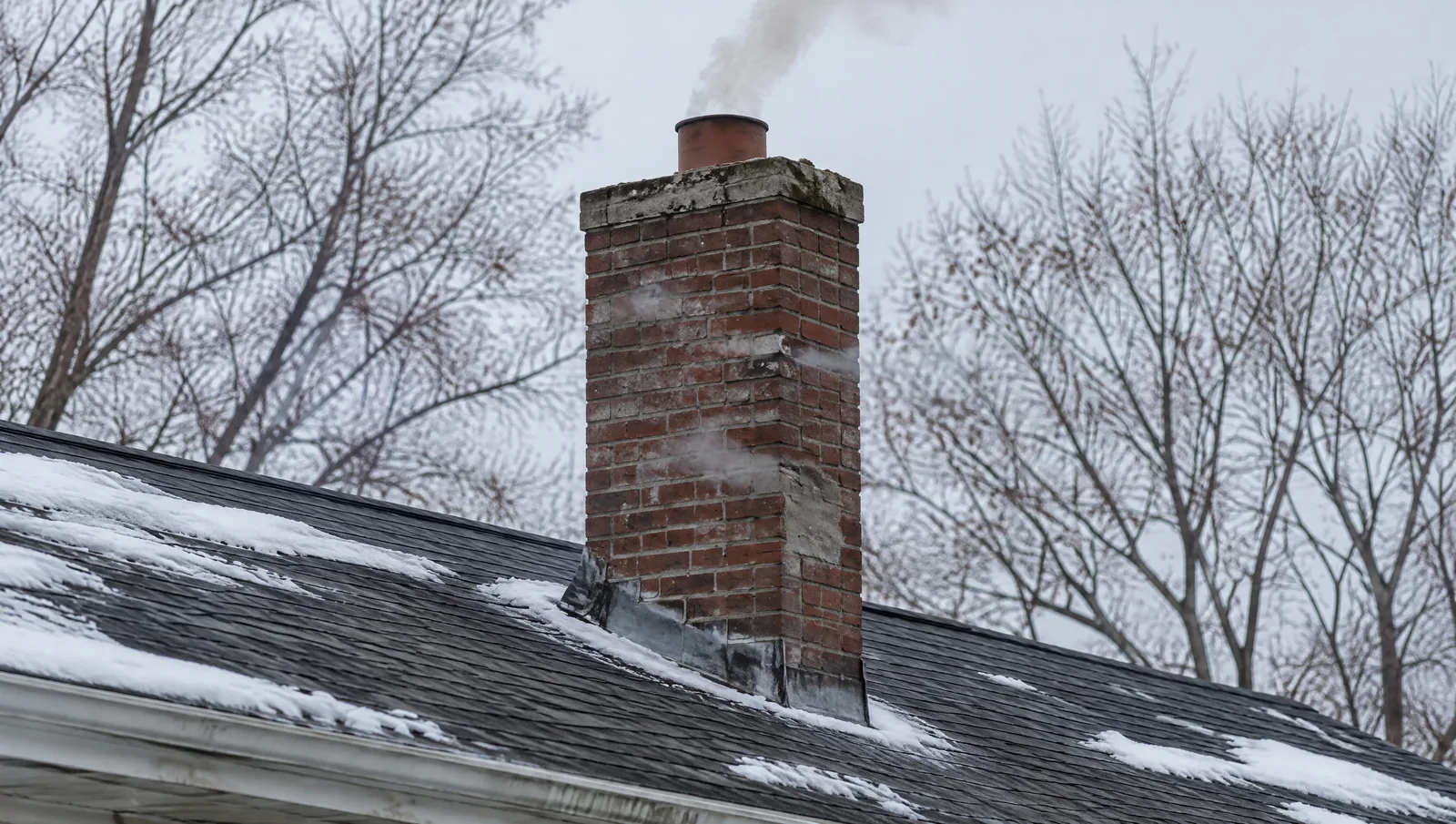
A chimney liner fails out of sight. It runs inside the masonry from the top of the chimney down to the fireplace or the basement, and the first hint of trouble usually turns up somewhere else: a sliver of orange tile in the ashes, a smoky smell in an upstairs closet, a furnace flue that starts dropping flakes.
These are the symptoms worth paying attention to, what each one usually points to, and the checks you can make without climbing onto the roof. None of them replaces a camera, but together they tell you when it is time to book one.
Ground rules before you start looking
Check with the fire out and the ashes cold, ideally the morning after the last fire. A strong flashlight and a pair of binoculars will do most of the work.
Stay off the roof, especially one that is steep, wet or frosty. Do not poke at loose pieces inside the flue or try to pull anything free. If something is hanging, leave it for someone with the right tools and a drop cloth.
Pieces of tile where they should not be
Clay flue tile is usually a reddish terracotta color with one smooth face that is often stained black from smoke. Finding pieces like that in the ashes, on the ledge behind the damper or inside a cleanout door is a strong sign that tiles are cracking or flaking somewhere above.
To check, open the cleanout door at the base of the chimney, often in the basement, and shine a light inside. CSIA's inspection procedures note that the material found in a cleanout often reveals the condition of the chimney interior. Soot and ash are normal. Curved or flat chips of tile are not.
Not every crumb is liner
Sandy gray grit is often old mortar or coating from the smoke chamber. Thick, pale pieces of brick usually come from the firebox walls. Both are worth mentioning to an inspector, but tile fragments point most directly at the liner.
Smoke, smells and stains in the wrong places
A sound liner keeps smoke inside the flue. When joints open or tiles crack, smoke and gases can work into the masonry and come out somewhere unexpected. CSIA lists smoke escaping through the mortar joints of the masonry or the tile liner as a warning sign of chimney fire damage.
- With a fire going, look at the outside of the chimney from the yard for wisps of smoke coming out of the brick rather than the top.
- Notice smoky smells in rooms or closets that share a wall with the chimney, upstairs as well as down.
- Look for dark, tar-colored stains on the outside brick, or on drywall around the chimney or the stovepipe connection.
- In the attic, look along the chimney for soot marks on the masonry.
A fire that suddenly behaves differently
Liner problems can change how a chimney draws. Pieces that fall inside can partly block the flue. The signs are a fire that refuses to catch, smoke rolling out of the fireplace opening, or a stove that feels sluggish even with dry wood.
Sometimes the liner was never right for the appliance. Extension specialists at the University of Idaho describe how a flue that is too large lets the exhaust cool, slow down and condense, which builds creosote and weakens draft. If creosote has piled up faster since a stove or insert went into an old fireplace, the flue size deserves a hard look.
Clues on oil and gas heating flues
A furnace or boiler flue rarely gets a second glance, yet it is where a lot of liner wear happens. Modern high-efficiency gas furnaces send a lot of water vapor up the flue, CSIA notes, and that moisture makes the flue more corrosive. Under those conditions clay tile can flake apart and block the chimney. Plenty of gas appliances also vent through chimneys originally built for oil.
- Flaky, scaly or crusty debris in the cleanout at the base of the heating flue
- Water or rust-colored staining at the cleanout or around the connector pipe
- A white crust building up on the outside brick near the top of the chimney
- A carbon monoxide alarm sounding while the heat is running
The alarm is not a clue to investigate
If a carbon monoxide alarm goes off, get everyone into fresh air and call for emergency help. The CDC lists headache, dizziness, weakness, upset stomach, vomiting, chest pain and confusion as common symptoms of carbon monoxide poisoning, and notes they are often described as flu-like.
What you can see from the yard
Binoculars from the ground, or a look from an upstairs window, can show more than you might expect. Focus on the top of the flue where it rises out of the crown.
- A top tile that is cracked, chipped or missing a corner
- A tile that has shifted, tilted or pushed up out of the crown
- A crown cracked tight around the tile
- No cap at all, so rain lands straight on the top tiles
Top damage tells only half the story
Damage at the top is the kind homeowners can see most easily, and sometimes the simplest to fix. It says nothing about the tiles further down.
Marks left by a past chimney fire
Many chimney fires go unnoticed, and a liner can be damaged by one without anyone in the house knowing. CSIA explains that these fires can reach about 2000°F, and the heat cracks tiles and displaces mortar. Its list of warning signs includes cracked or collapsed tiles, tiles with large chunks missing, a warped damper and a discolored or distorted rain cap.
If you find any of these, stop using the fireplace or stove. CSIA advises that the chimney stay out of use until it has been swept and evaluated.
What the symptoms cannot tell you
Everything above is a clue, not a diagnosis. A crack halfway up a flue can exist with no outward sign at all, and a smell can come from a damper or a downdraft rather than a liner. The answer is inside the flue.
CSIA's guidance is to have a Level 2 inspection, with its video scan, done ahead of any lining or relining job. The scan shows whether the damage is limited to the top tile, spread through the flue, or tied to a flue that is simply the wrong size for what it serves.
Once you know what the camera found, our page on chimney liner repair and replacement explains when a single tile can be fixed and when the whole flue should be relined.