Safety · Homeowner guide
Animals in the Chimney: Prevention and What to Do
How to work out what has moved into your flue, the mistakes that make things worse, who to call, and how to close the chimney to wildlife afterward.
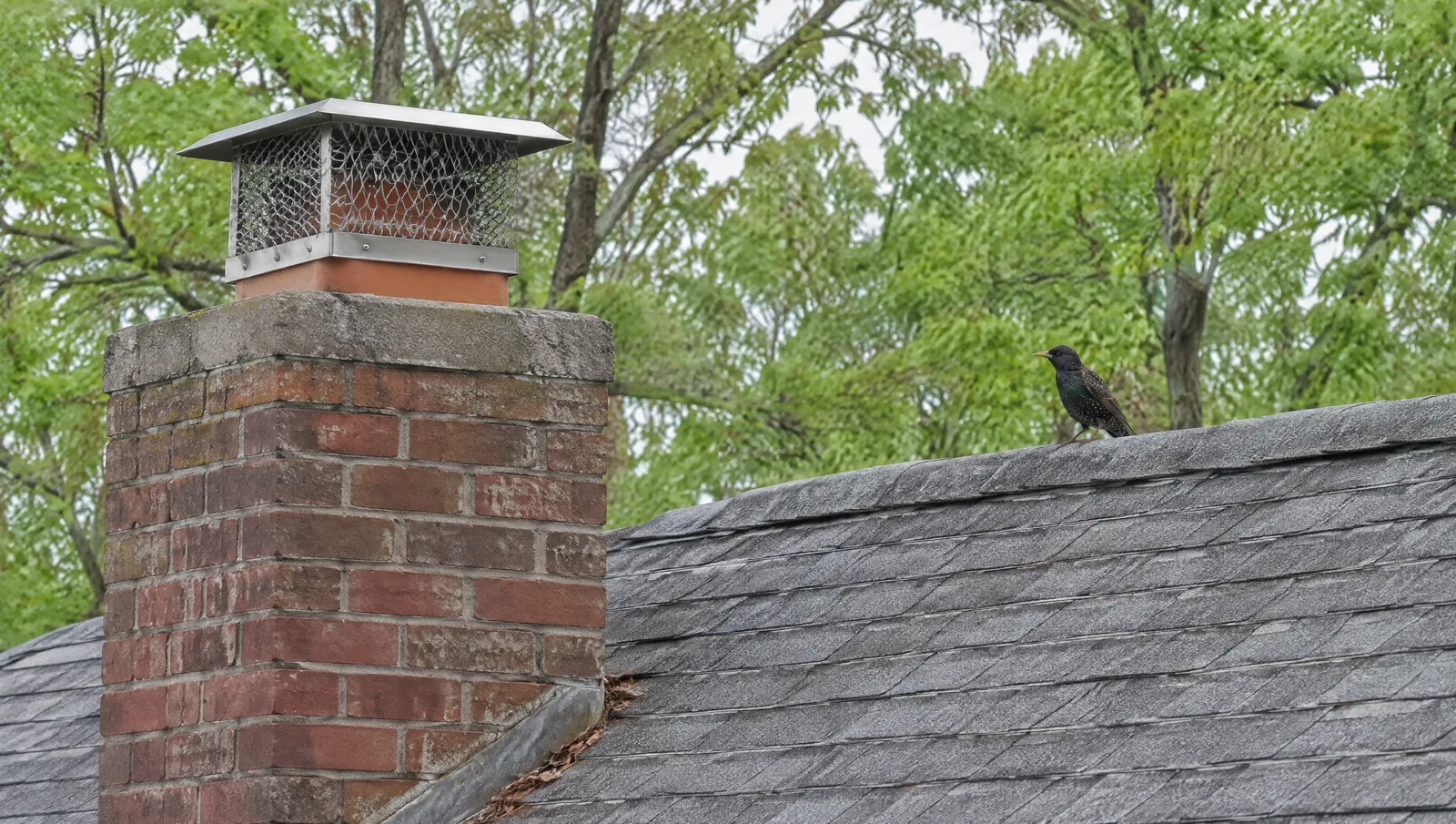
To a bird, a squirrel or a raccoon, a chimney looks a lot like a hollow tree. It is tall, dark and sheltered from the wind, and without a cap it is wide open at the top. The first clue is usually a sound coming from behind the fireplace: scratching, fluttering or a high-pitched chatter that was not there last week.
Most animal problems in a chimney can be solved without harming the animal or the house. It comes down to knowing what is in there, what not to try, and when the job belongs to a wildlife professional instead of a chimney sweep.
First, work out what is in the chimney
The sound and the time of day narrow it down. Stand near the fireplace for a few minutes with the damper closed and just listen.
- Steady, high-pitched chattering in summer that rises and falls through the day: often chimney swift chicks
- Fluttering and scraping with no chatter: often a single bird that fell in and cannot climb out
- Scurrying and scratching in daylight: often squirrels
- Heavier movement and crying or chattering sounds around dusk and overnight: often a raccoon, sometimes with young
- A sudden bad smell followed by silence: possibly an animal that died in the flue
Leave the damper shut while you figure it out
It is tempting to open the damper and shine a light up the flue. An animal that drops into the firebox can end up loose in the house, and a frightened squirrel or raccoon in the living room is a much bigger problem than one in the chimney.
Chimney swifts: the birds you have to leave alone
Chimney swifts are small, dark birds that spend almost their whole lives flying. Inside the flue they cling to the wall with their feet and build a small twig nest glued together with saliva.
Federal law, the Migratory Bird Treaty Act, protects them. The Maryland Department of Natural Resources explains that a federal permit is needed to remove the birds or their nests during nesting season. Humane World for Animals adds that anyone who knowingly destroys a nest that might hold eggs or young can be fined.
The practical answer is patience. Maryland DNR notes that the chatter peaks during the chicks' last two weeks in the nest, and the young are often ready to leave within about two weeks of when a homeowner first hears them. Once the birds have gone for the season, the chimney can be swept, the nest removed and a cap installed.
If a cleaning is already on the calendar, Maryland DNR recommends pushing it back at least six weeks when there are eggs, or at least four weeks when there are young.
Squirrels and raccoons
Squirrels
Squirrels usually tumble into a flue while exploring or hunting for a nest site. Rough brick sometimes lets them climb back out, but a smooth metal liner gives them nothing to grip, so many end up on the smoke shelf above a closed damper. Keep the damper shut, keep pets away from the fireplace, and get help instead of coaxing it into the room.
Raccoons
Humane World for Animals puts it simply: a mother raccoon sees an uncapped chimney as a perfect nursery. Her young cannot climb out on their own, and she will not leave them behind. That is why a raccoon in a chimney is often a family rather than one animal.
According to Humane World, the easiest and most humane answer is often to wait until the family moves out on its own, then cap the chimney. When waiting is not an option, a humane wildlife professional can remove the family together and release them within their home range.
What not to do
The quick fixes people reach for tend to hurt the animal, the chimney or the house.
- Do not light a fire or burn anything to smoke an animal out. Humane World warns that young raccoons cannot escape and can die, and a fire beneath a nest of dry twigs adds a fire risk of its own.
- Do not open the damper to let the animal go. It will come out into the house, not up the chimney.
- Do not cap or screen the top while anything is still inside. Humane World stresses making sure every animal has left before a cap goes on, or the ones left behind are trapped.
- Do not pour repellents, mothballs or chemicals down the flue. They are not made for use in a chimney, and the fumes have nowhere to go but back into the room.
- Do not reach up into the flue. A cornered wild animal will bite or scratch.
- Do not pull out an active swift nest. That is covered by federal law, not left to judgment.
Why a nest in the flue is a carbon monoxide hazard
A chimney has two jobs. It feeds air to the fire and carries the exhaust out of the house. A nest, a pile of sticks or a dead animal blocks that path. CSIA lists animal or bird nests obstructing chimney flues among the problems that can force carbon monoxide, fumes and soot into the living space.
The risk is greatest in a chimney that vents a furnace, boiler or water heater, since those appliances run on their own, often in a basement where nobody would notice smoke. CSIA stresses annual inspections for every chimney, gas furnaces included.
Carbon monoxide alarms are the backstop here, so test them. If one sounds, get everyone outside first and call 911 or the fire department from there.
Wildlife control or chimney sweep: who to call
Call a humane wildlife control professional when a live animal is in the flue, when young may be present, or when you cannot tell what is in there. Removing live wildlife safely is their work, and they can keep a raccoon family together.
Call a chimney sweep once the animals are gone. A sweep removes nest material, droppings and debris, checks the flue and damper for damage, and confirms the chimney is clear before the fireplace or heating system uses it again. Humane World recommends exactly that order for raccoons: have the flue cleaned after they leave, then install an expanded metal chimney cap so it does not happen again.
Keeping animals out for good
The lasting fix is a properly fitted cap with mesh on every side. A plain rain hood with open sides keeps water off the flue but leaves the door open to animals. Humane World for Animals recommends an NFPA-approved expanded metal cap once the chimney is empty. Both Humane World and Maryland DNR say chimneys with metal liners should always be capped, because birds that get into them become trapped.
Look at the cap once a year and after any big storm. Rusted mesh, a lid knocked crooked by a branch or a gap at one corner is all a squirrel needs. Cutting back branches that hang over the roof also removes an easy route to the top of the chimney.
For help choosing a style and size that fits your chimney, see the page on chimney cap installation and repair, which compares single-flue and multi-flue caps, mesh options and metals.