Homeowner Guide · Homeowner guide
Buying an Older Home: Chimney Questions to Ask Before Closing
What a standard home inspection skips, the chimney questions worth putting to the seller, and how to read a chimney report before you sign.
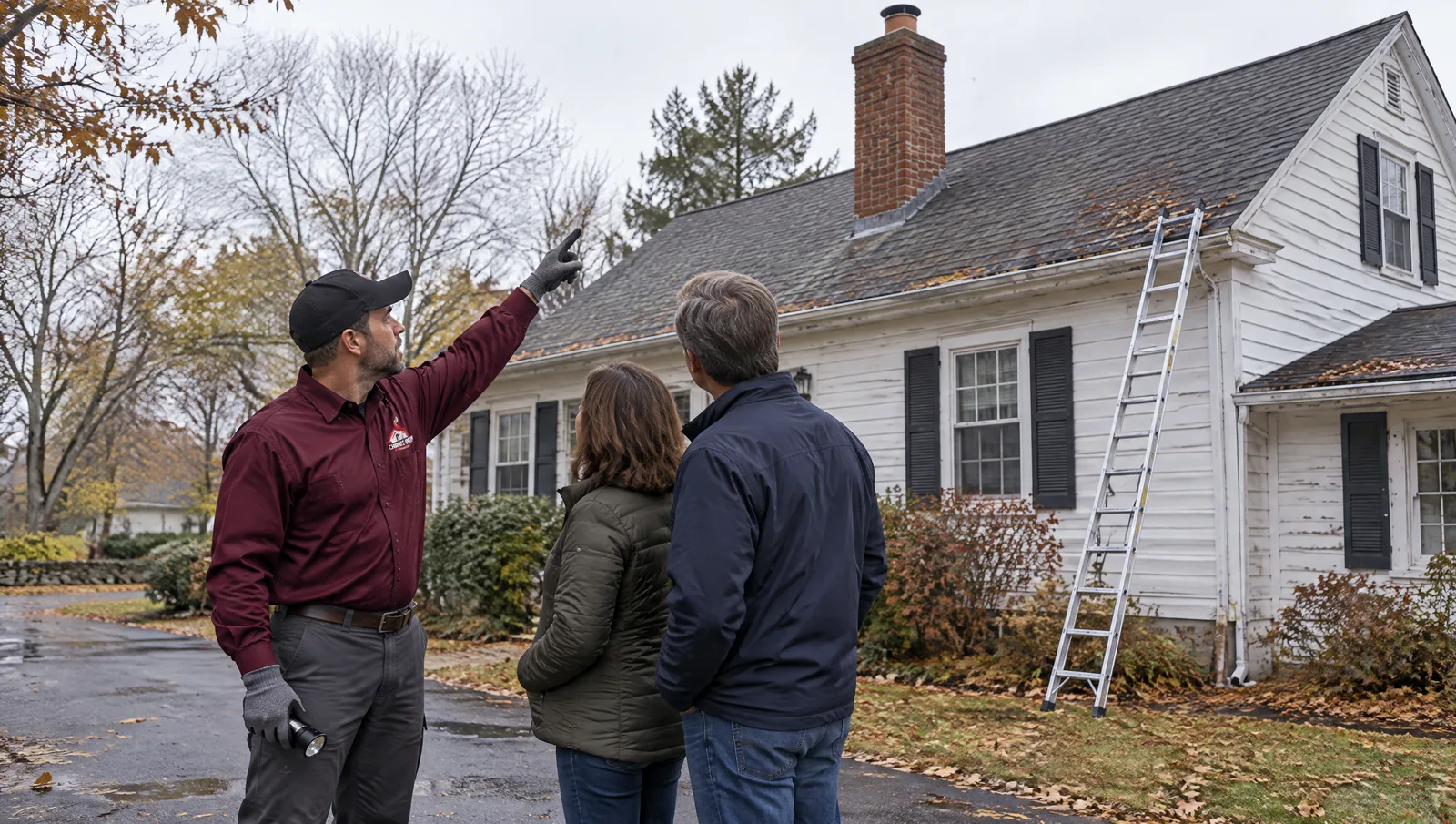
An older house often comes with a chimney that has outlasted several owners, several heating systems and decades of weather. The listing might say "fireplace" and leave it there. What a buyer really needs to know is whether every flue in that chimney is sound and suited to whatever it serves today.
This guide covers what to ask, what to request in writing, and how a chimney inspection fits into the weeks between an accepted offer and the closing table.
What a home inspection does and does not cover
A general home inspection is valuable, but it is not a chimney inspection. In New Jersey, the standards of practice for licensed home inspectors call for a look at chimney exteriors and combustion vents, yet they exclude the interiors of flues and chimneys. Fireplaces are inspected without testing how they draft.
That leaves a gap right where many problems hide. Cracked liner tiles, open mortar joints and old fire damage sit inside the flue, out of view from the roof and the hearth. When a home inspector writes that the chimney should be evaluated by a specialist, they are pointing at that gap, not dodging the question.
Questions to ask the seller
Sellers will not know every detail, but their answers show you where to look. Ask in writing, and keep the replies with your purchase paperwork.
- When was the chimney last swept and inspected, and by whom?
- Which appliances vent into it: furnace, boiler, water heater, wood stove, fireplace?
- Has the heating system ever changed fuel, for example from oil to gas or propane?
- Has the chimney been relined, and is there paperwork for the liner?
- Has there been a chimney fire, a leak or an animal in the flue?
- Is the fireplace used, and when was the last fire?
Clues you can spot during a showing
You do not need a ladder to notice warning signs. From the yard, look for a stack that leans, mortar missing or crumbling near the top, brick faces that have broken away, a missing cap, or heavy rust streaks.
Inside, check the ceilings and walls beside the chimney on every floor, and in the attic if you can get there. Water stains, bubbling paint and soft plaster suggest a leak. In the basement, look at the cleanout door and the pipe from the furnace or water heater for soot, rust or water marks. At the fireplace, shine a light up past the damper and see whether it opens and closes cleanly.
Why the heating history matters
Older houses rarely keep the heating system they were built with. A chimney lined for an oil burner in the 1960s may now serve a gas furnace, a water heater on its own, or nothing at all except a fireplace.
Each change can leave the flue the wrong size or the liner in poor shape. CSIA links a Level II inspection to two situations a buyer often meets at once: the sale or transfer of a property, and a change in the fuel being burned. A purchase that follows a past conversion is a good reason to look closely.
In Ogdensburg, where most homes were built before 1980 and fuel oil is still the leading heating fuel, our page on chimney care in Ogdensburg describes what the borough's mid-century chimneys usually need.
Stoves, inserts and other additions
Many older homes have had a wood stove, a fireplace insert or a gas log set added over the years, and each one changes what the chimney is doing. A stove or insert generally needs its own connection or liner running up the chimney, and every factory-made unit comes with installation instructions that set its clearances to walls, floors and trim.
Ask whether the seller still has the manual or the installation paperwork, and note the make and model if you can see a label. The chimney inspector can then compare what is installed with what the maker requires. Missing heat shields, scorched trim near a stove, or a stove pipe pushed into a fireplace opening with no liner above it are all worth raising before you sign.
What a chimney inspection for a sale includes
According to CSIA, a Level II inspection covers everything in a routine inspection plus the accessible parts of attics, crawl spaces and basements. It may add a smoke or pressure test and a video inspection of the flue. The camera is what shows the inside of the liner.
Ask for a written report with photos. A useful report names each flue and what it serves, describes the liner and its condition, comments on the crown, flashing and cap, and lists recommended repairs in order of importance. Vague wording such as "needs work" is worth questioning before you rely on it.
Fitting it into the contract timeline
Most purchase contracts give you a short window for inspections. Book the chimney inspection as soon as the offer is accepted, so the report arrives before that window closes and there is still time to get a repair estimate.
If the inspection turns up a problem, the report gives you something specific to discuss with the seller, whether that ends up as a repair before closing, a credit or a price adjustment. Your attorney or agent can advise on how to handle it under your particular contract.
After you move in
A chimney that passes before closing still needs regular attention. NFPA 211, quoted by CSIA, calls for chimneys, fireplaces and vents to be inspected at least once a year. The U.S. Fire Administration recommends the same yearly cleaning and inspection for heating equipment and chimneys.
Keep the inspection report with the house records. It becomes the baseline for every visit that follows, and it will be the first document a future buyer asks to see.