
Cost Factors · Homeowner guide
What Affects the Cost of Chimney Repair
The factors that move a chimney repair estimate, why two quotes for the same chimney can differ, and how to compare them fairly.
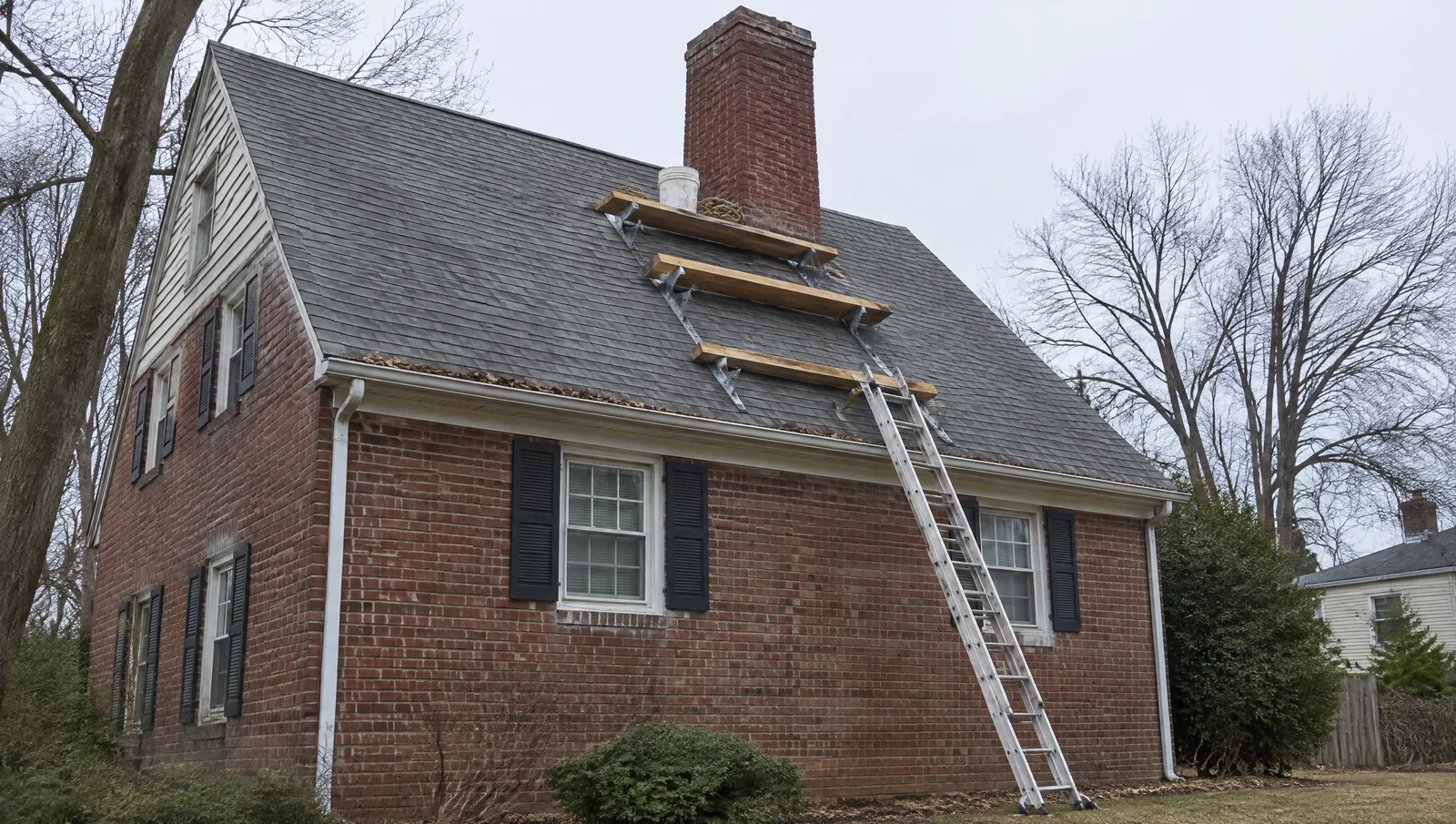
Ask three contractors to price the same chimney and you may get three very different numbers. That is not always a sign that someone is overcharging. More often, each person saw a different problem, planned a different fix, or priced in access and materials differently.
This article walks through what actually drives the cost of a chimney repair, so you can read an estimate with confidence and ask the right questions before you sign anything. It does not quote prices, because a fair price depends on the specific chimney in front of the person writing it.
The chimney itself: height, roof and access
Labor makes up a large part of most masonry work, and the hardest labor is simply getting to the chimney and working there safely. A short stack on a gentle roof over a one-story wing is a very different job from a tall chimney rising off a steep roof three floors up.
Expect access to show up in an estimate as ladders, roof brackets, harness anchors or scaffolding. A chimney that sits behind a deck, over a sunroom or on the lake side of a sloped lot may need extra staging. None of that is padding. It is the cost of doing the work without damaging the roof or anyone on it.
- Height of the stack above the roofline
- Pitch and condition of the roof around it
- How many stories up the work happens
- Whether staging or scaffolding is needed
- Number of flues inside the chimney
What is actually wrong
The single biggest factor is the repair itself. Resealing flashing or sealing small cracks in a crown is a modest amount of work. Repointing a whole stack takes much longer, because every joint has to be cut out and refilled by hand. Rebuilding the courses above the roof means taking brick down, hauling it off and laying new masonry and a new crown.
Leaks are priced on their source
Two contractors can look at the same ceiling stain and blame different parts of the chimney. One may price new flashing while another prices a crown, and both may be partly right. A quote is only as good as the diagnosis behind it, so ask each one why they believe water is getting in where they say it is.
Extent matters more than appearance
A badly stained interior wall can come from a small flashing gap. A chimney that looks fine from the driveway can have soft, crumbling mortar on the side facing the weather. The estimate should be built on what was found up close, not on what is visible from the ground.
If you are trying to work out which of these repairs your own chimney needs, our page on chimney repair explains how each leak source is diagnosed and when a rebuild makes more sense than repointing.
Materials and how well they match
Materials are rarely the largest line, but choices here change both the price and how long the repair lasts.
Mortar is a good example. The National Park Service's guidance on repointing says new mortar should be softer and more vapor permeable than the brick it sits between. On an older chimney built with soft brick, that can mean a lime-based mortar rather than a hard, cement-rich bagged mix. It costs more effort to get right, but hard mortar in soft brick can trap moisture and cause the brick faces to break away.
Crowns vary too. The Chimney Safety Institute of America describes a cast crown with an expansion joint, projecting about two inches past each side, as a long-lasting alternative to the thin sand-and-mortar wash many chimneys were built with. Flashing can be made from different metals, and matching the color and size of older brick on a rebuild can take extra searching.
Timing, weather and the cost of waiting
Masonry needs suitable weather to cure. The National Park Service's repointing guidance recommends wall temperatures between 40 and 95 degrees Fahrenheit. Cold-season work may need protection from freezing, or it may be scheduled for a milder stretch.
Waiting has its own cost. Water that gets into brick and mortar freezes and expands by about 9%, according to a technical bulletin from the National Institutes of Health facilities office, and each freeze opens cracks a little wider for the next thaw. A chimney that needed repointing one fall can need its top courses rebuilt a few winters later. CSIA puts it bluntly: water causes more damage to masonry chimneys than fire, and that damage tends to be slow and easy to ignore.
Why two quotes are far apart, and how to compare them
Line the quotes up by scope before you compare totals. A lower number that only reseals the flashing is not the same job as a higher one that also replaces a cracked crown. If one estimate includes repointing the whole stack and another only spots the worst joints, the difference may be fair.
The National Park Service notes that once a quarter to half or more of a masonry wall needs repointing, doing the entire wall can cost less than spot repairs. The same thinking applies to a chimney. A cheaper partial job that fails in two winters can cost more over time than doing the larger repair once.
What a written estimate should list
A clear estimate lets you see exactly what you are paying for and compare it with another one line by line.
- What was inspected, and from where: roof, attic, firebox or appliance
- The cause of the problem, in plain words, with photos
- Each repair as its own line, such as flashing, crown, repointing or rebuild
- Materials named, including mortar type, crown type and flashing metal
- How far down any rebuild goes, counted in courses or measured from the roofline
- How hidden damage will be handled and approved
- Cleanup, debris removal and roof protection
- Any weather or curing limits on the schedule
When repairing sooner costs less
Small, early repairs are almost always cheaper than the damage they prevent. Sealing a cracked crown or fixing lifted flashing stops water before it reaches the brick core, the flue tiles and the framing around the chimney.
If the damage followed a chimney fire, check your homeowner's policy before work starts. CSIA notes that most chimney fire damage is considered a covered loss, and suggests getting a written repair estimate to give your adjuster.