Safety · Homeowner guide
Chimney Fire Warning Signs and What to Do
Some chimney fires roar and some burn so quietly nobody notices. Knowing both kinds, and what to do in the first few minutes, protects the people in the house and the house itself.
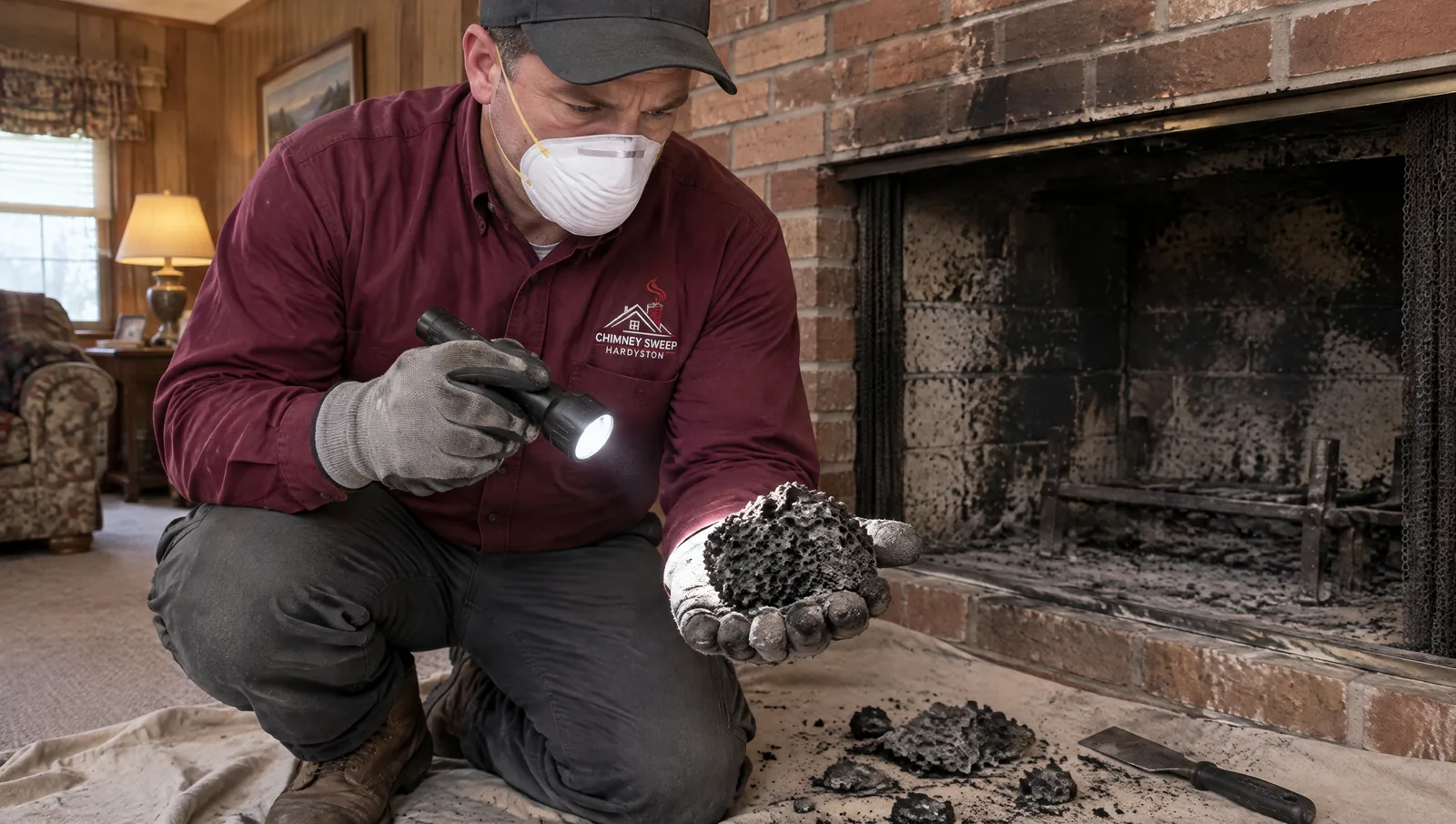
A chimney fire happens when deposits inside the flue catch fire. In a wood-burning chimney that fuel is creosote, the tarry residue that condenses from smoke as it cools on its way up. Once it ignites, it can burn far hotter than the fire in the fireplace or stove that started it.
This article covers how to recognise a chimney fire while it is burning, why many of them go unnoticed, the steps to take right away, the evidence a past fire leaves behind and what has to happen before the fireplace or stove is used again.
What a chimney fire sounds and smells like
A fast-burning chimney fire is hard to ignore. The Chimney Safety Institute of America describes loud cracking and popping, a lot of dense smoke and an intense, hot smell. Portland Fire & Rescue adds a low roar, sucking sounds as the fire pulls in air, shaking stovepipes and hot spots on the wall around the chimney.
Outside, there may be flames or heavy smoke coming out of the top of the chimney, sometimes with sparks or burning flakes of creosote landing on the roof. A neighbor or a passing driver may spot it before anyone inside does.
- A low roar from the fireplace or stove
- Cracking and popping inside the chimney
- Dense smoke in the room or pouring from the chimney top
- An intense, hot smell unlike a normal fire
- Stovepipes that shake or glow, or walls that feel hot near the chimney
The quiet kind most people never notice
According to CSIA, the majority of chimney fires go undetected. They burn slowly because they lack enough air or fuel to become dramatic, and they are often discovered only at a later inspection. That does not make them harmless. CSIA notes that masonry chimney fires can reach around 2000°F, hot enough to crack clay flue tiles and melt mortar, which opens a path for heat to reach the wood framing around the chimney.
This is why a chimney that looks fine from the room can still be damaged. A slow fire may leave the fireplace working normally while the liner above it is split.
What to do right away
If you suspect a chimney fire, treat it as a house fire. The goal is to get people out and firefighters in, not to fight it yourself.
- Get everyone out of the house, including pets.
- Call 911 from a cell phone outside or from a neighbor's phone, as Portland Fire & Rescue advises.
- If you can do it safely on the way out, shut off the fire's air supply by closing the stove's air controls or the fireplace's glass doors.
- Do not pour water down the chimney or into a hot stove. The Livermore Fire Protection District in California warns it can cause steam explosions and damage the flue.
- Call 911 even if the fire seems to have gone out. Firefighters can check the roof, the attic and the yard for embers that escaped.
Clues that a chimney fire already happened
Because so many chimney fires go unnoticed, the evidence often turns up later, during a sweep or an inspection, or when a homeowner looks closely at the roof. CSIA lists the signs to watch for. Any one of them is a reason to stop using the fireplace or stove until the chimney has been examined.
- Creosote that looks puffy or honeycombed instead of flat and shiny
- A warped metal damper, smoke chamber connector or metal chimney
- Cracked or collapsed flue tiles, or tile pieces in the firebox
- Flakes of creosote on the roof or on the ground around the house
- A discolored or distorted rain cap, or damaged roofing near the chimney
- Cracks in the outside masonry, or smoke seeping through mortar joints
Before you light another fire
CSIA's guidance after a chimney fire is clear. Do not use the chimney again until it has been swept and evaluated, because the damage often cannot be seen from the room. A Level 2 inspection, which includes a video scan of the flue, is the level CSIA recommends after a chimney fire. The camera shows cracked tiles, missing mortar and gaps in the liner that would let heat or gases escape the next time the flue is used.
Repairs depend on what the inspection finds. A lightly damaged liner may be repairable, while a liner with cracked or displaced tiles often needs replacing, usually with a stainless-steel liner sized to the appliance. Exterior cracks, a damaged crown or a warped damper are handled as separate repairs.
Check your homeowner's insurance before work begins. CSIA notes that most chimney fire damage is treated as a covered loss and suggests getting a written repair estimate to give the adjuster.
Lowering the odds of a chimney fire
Creosote builds faster when the fire is starved of air, when the wood is wet, and when the flue runs cooler than it should. CSIA points to closing glass doors or the damper too soon and overloading a wood stove as common contributors. The EPA recommends burning only dry, split wood with a moisture content below 20 percent, seasoned for at least six months and checked with a wood moisture meter.
Annual inspection matters most for anyone who burns wood or coal through the winter. In rural, wooded townships such as West Milford, Census estimates count a few hundred homes that heat mainly with wood or coal, and those stoves send a steady stream of deposits up the flue all season. A yearly inspection, with sweeping whenever buildup is found, removes the fuel a chimney fire needs before it has a chance to ignite.
For homes that rely on a stove or fireplace through the winter, our page on chimney service in West Milford explains how sweeping and inspections are handled for wood, coal and gas flues there.