Technical · Homeowner guide
Wood Stoves and Fireplace Inserts: Venting and Cleaning Basics
A plain explanation of how a wood stove or fireplace insert sends smoke outside, what makes the setup safe, and the cleaning habits that keep creosote in check.
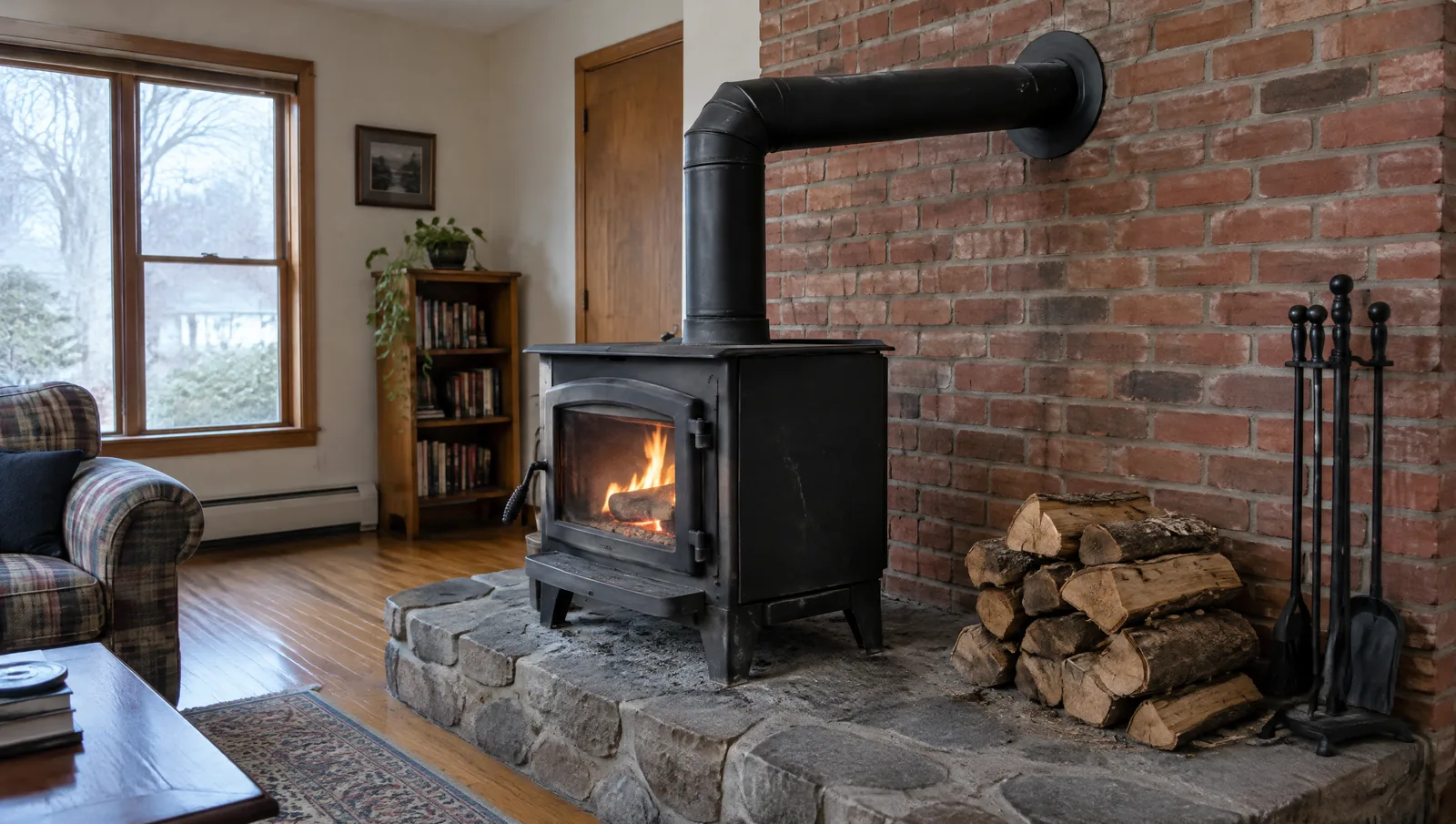
A wood stove or a fireplace insert can turn a drafty fireplace into real heat. It also changes how the chimney works. A stove burns longer and hotter than an open fire, and it often runs with its air turned down for hours, so the flue above it gets more use and collects deposits in a different way.
This guide covers the venting side of owning one. It explains the difference between a stove and an insert, why the flue has to fit the appliance, what to look at on the pipe between the stove and the chimney, and how to set up a cleaning routine that matches how hard you burn.
Stove or insert: how each one vents
A freestanding wood stove sits out on the hearth or the floor. Smoke leaves through a metal connector pipe, often called stovepipe, which runs to a thimble in a masonry chimney or to a factory-built chimney. You can see most of that pipe, and it can be taken apart for cleaning.
An insert is a firebox built to slide into an existing masonry fireplace. It uses the fireplace's chimney, and in a sound installation a liner runs from the insert's outlet up through the flue. From the room, an insert looks tidy. The trade-off is that its venting is hidden behind the faceplate and inside the chimney, which matters later when it needs cleaning.
The flue has to fit the appliance
A chimney that worked for an open fireplace is not automatically right for a stove. The Chimney Safety Institute of America (CSIA) advises having the chimney and venting system inspected before a new hearth appliance is installed. The questions are practical. Is the flue the right size for the new unit? Is it free of cracks, obstructions and creosote? Is the chimney tall enough to give the appliance the draft it needs?
CSIA is also clear about one point. A masonry chimney with no liner needs one before a new appliance goes in, whatever fuel it burns. For wood, CSIA recommends insulating any liner that serves a wood-burning appliance, because it is almost impossible to confirm the required clearances inside an old chimney without taking it apart.
Why an oversized flue causes trouble
Smoke from a modern stove leaves at a lower volume than smoke from a roaring open fireplace. Sent up a large masonry flue, it slows down and cools. Cooler smoke condenses on the flue walls as creosote, and weak draft can push smoke back into the room when the door is opened. A liner sized to the stove's outlet keeps the gases moving and warm.
What to check on the connector pipe
On a freestanding stove, the connector is the part homeowners can actually see, and CSIA's inspection procedure gives a useful checklist for it. Look at it with the stove cold.
- The run should be as short and straight as possible, without extra elbows
- Sections should be secure, of the proper thickness, and sloped upward toward the chimney
- The joint at the thimble, where the pipe enters the masonry, should be tight and solid
- Where the pipe passes through a wall, the pass-through needs adequate clearance to anything that burns
- Floor protection under a wood stove should extend 18 inches beyond the stove in all directions unless the stove's listing says otherwise
Why stoves build creosote, and how to slow it down
Creosote forms when smoke cools and condenses inside the flue. CSIA describes it as highly combustible and names the stove owner's usual mistakes. Closing the air inlets or the stove damper too soon or too far starves the fire, and overloading the firebox to get a longer burn makes it worse. Both produce a cool, smoky fire, and that smoke leaves more residue than a brisk burn.
Dry wood is the other half of the answer. The Environmental Protection Agency's Burn Wise guidance calls for split wood seasoned at least six months and below 20 percent moisture, checked with an inexpensive moisture meter. Wet wood spends its energy boiling off water, which cools the fire and the flue. Painted, treated or coated wood, plastic and trash should never go in a stove.
A few habits that help
Start each fire hot to warm the flue before turning the air down. Give the stove short, hot burns after a long low one. Keep the glass and the baffle area in view, since a sudden increase in dark, sticky residue usually means the wood is wet or the air is too low.
Cleaning and inspection: how often
Fire officials recommend having a wood-burning appliance, its chimney and its vent professionally inspected every year, and the U.S. Fire Administration gives the same advice for all heating equipment and chimneys. Cleaning frequency depends on how much you burn. CSIA's guidance is to sweep once deposits reach about one-eighth of an inch, which a stove used as a main heat source can reach well before spring.
Inserts deserve extra attention here. Because the liner and the insert's outlet are hidden, an inspector may need to disconnect the appliance or its connection to see into the flue. Ask whether the inspection included the full liner, not just the view from the roof. Your stove's manual will also list routine tasks, such as checking door gaskets, and those belong in the same routine.
Heavy-use homes: plan for a mid-season check
In homes where a stove carries much of the heating load, one cleaning a year may not be enough. Rural houses that run a wood stove beside an oil boiler are a good example, because the chimney may hold more than one flue and both work hard all winter. A mid-season look at the connector and the top of the flue catches heavy buildup before it becomes a hazard.
Whatever the house, stop using the stove and have the chimney checked if you smell smoke in the house when the stove is closed, hear loud popping or a low rumble from the pipe, or see flakes of creosote on the roof or the ground. CSIA warns against using a chimney after a suspected chimney fire until it has been swept and evaluated.
If you heat a farmhouse or country home this way, our page on chimney service in Wantage, NJ explains how oil and wood flues are swept and inspected in a township where both are common.