
Seasonal · Homeowner guide
Freeze-Thaw Winters and Chimney Masonry
A homeowner's calendar for chimney masonry in a northern New Jersey winter: what the weather is doing to the brick each month, what to watch for, and when to schedule the fix.
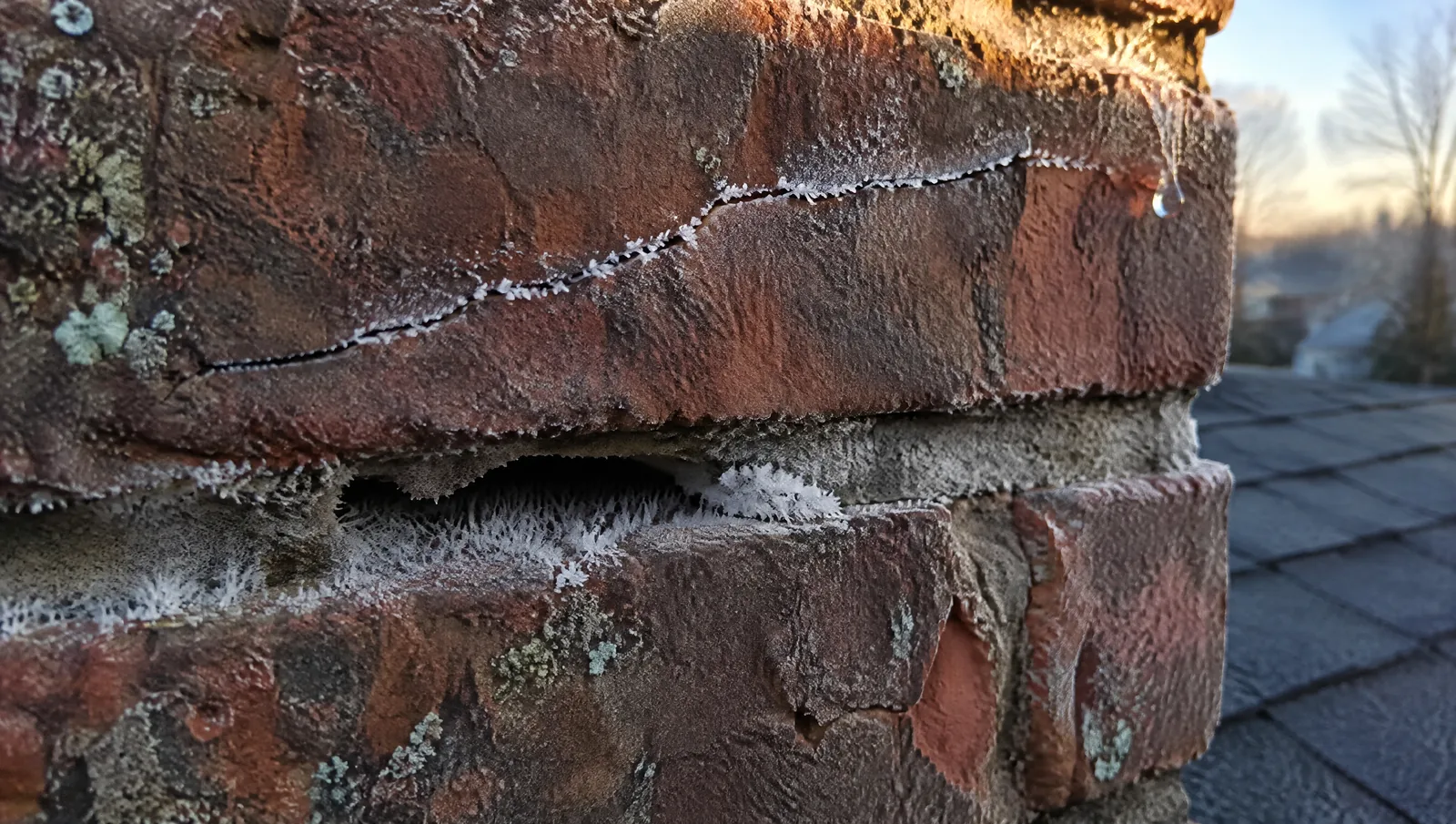
Most people picture chimney damage happening in the dead of winter. In northern New Jersey, much of it actually happens on the edges of winter, in the weeks when afternoons climb above freezing and nights drop below it. Every swing across 32°F gives water in the brick another chance to freeze, expand and push a crack a little wider.
That pattern makes freeze-thaw damage a calendar problem as much as a masonry problem. This article walks through the year month by month, using NOAA's 1991 to 2020 climate normals for the Newton weather station in Sussex County, and explains what a homeowner can watch for and when repairs are realistic.
Count the crossings, not the coldest night
A single bitter night does less harm than a long run of nights that hover around freezing after mild days. In deep cold, water already in the masonry stays frozen. The trouble comes from repetition, when the brick soaks up rain or meltwater during the day and freezes again after dark.
Newton's normals show how that plays out. January is the coldest month, with a normal low near 17°F and a normal high near 37°F. Yet March, with a normal high near 48°F, still averages about 23 nights at or below freezing. A wet chimney in March can go through a freeze and a thaw almost every day.
September and early October: the repair window
Late summer into early fall is the best time to fix masonry before winter. Mortar and crown repairs need mild, steady weather to cure. The National Park Service's repointing guidance calls for masonry work when temperatures sit between about 40 and 95°F, and Newton's median first fall freeze arrives around October 16.
If a spring inspection turned up open joints, a cracked crown or loose flashing, this is when to get it done. CSIA compares common brick to a sponge that soaks up water, and defective joints make that worse. If a water repellent is planned, it belongs after those repairs are finished, never in place of them.
- Repoint joints that are soft, sandy or recessed
- Seal hairline crown cracks or replace a crown that is breaking up
- Reseal or replace flashing at the roofline
- Fit or replace a cap so rain stops landing straight in the flue
Late October and November: closing up for winter
The first freezes arrive, and November gets busy. Newton averages about 20 nights at or below freezing that month, while normal highs still reach the low 50s. Leaves are down too, and a crown covered in wet leaves holds moisture against the masonry for days.
This is a good month for a quick look from the ground with binoculars. Check that the cap is still straight and the mesh is intact, that nothing is growing or piling up on the crown, and that the gutters below the chimney are clear. Water that overflows a clogged gutter can keep the base of an outside chimney soaked.
December through February: watch and write it down
Deep winter is the season for observation, not masonry repair. December, January and February each average 25 to 28 freezing nights at Newton, and mortar cannot cure properly in that cold. What a homeowner can do is notice and record.
After a snowstorm, see where snow piles against the chimney and how long it lingers. Watch for icicles or ice sheets forming on the brick, which show where meltwater is running. Inside, look at ceilings and walls near the chimney after each thaw and photograph any stain with the date. Those notes make a spring inspection much faster and more accurate.
If something changes suddenly
A brick falling from the stack, a chimney that looks like it is leaning, or pieces of flue tile in the firebox are not wait-until-spring problems. Stop using the fireplace or stove connected to that chimney and have it checked, even in January. Cap and flashing fixes, and temporary protection, can often be done in cold weather even when masonry work cannot.
March and April: when the damage shows
March is the month to watch most closely. With roughly 23 freezing nights and afternoons that often melt the snow, it delivers more freeze-thaw cycles than any other month. April eases off to about 10 freezing nights, and Newton's median last spring freeze falls around April 24.
As the masonry dries out in spring, the winter's toll becomes visible. White, chalky bloom on the brick shows where water travelled through it. Chips of brick face on the roof or in the gutter mean spalling has started. Sand in the gutter below the chimney points to mortar washing out of the joints. A new stain indoors that appeared during the thaw usually traces back to the crown, the flashing or the cap.
May through August: inspect and book
Once the heating season ends, schedule an inspection while the winter's evidence is fresh. A sweep with a camera can check the flue tiles for cracks that freeze-thaw and moisture opened from the inside, while a look from the roof covers the crown, the joints and the flashing.
Booking repair work early in summer keeps it inside that mild-weather window with time to spare. It also avoids the fall rush, when many homeowners discover the same problems on the first cold night. Older chimneys need the most attention on this calendar, because soft brick and worn joints take on water faster than newer masonry.
That is especially true in old village housing, and our page on chimney sweep service in Branchville covers how chimneys on the borough's older homes are swept, inspected and repaired.